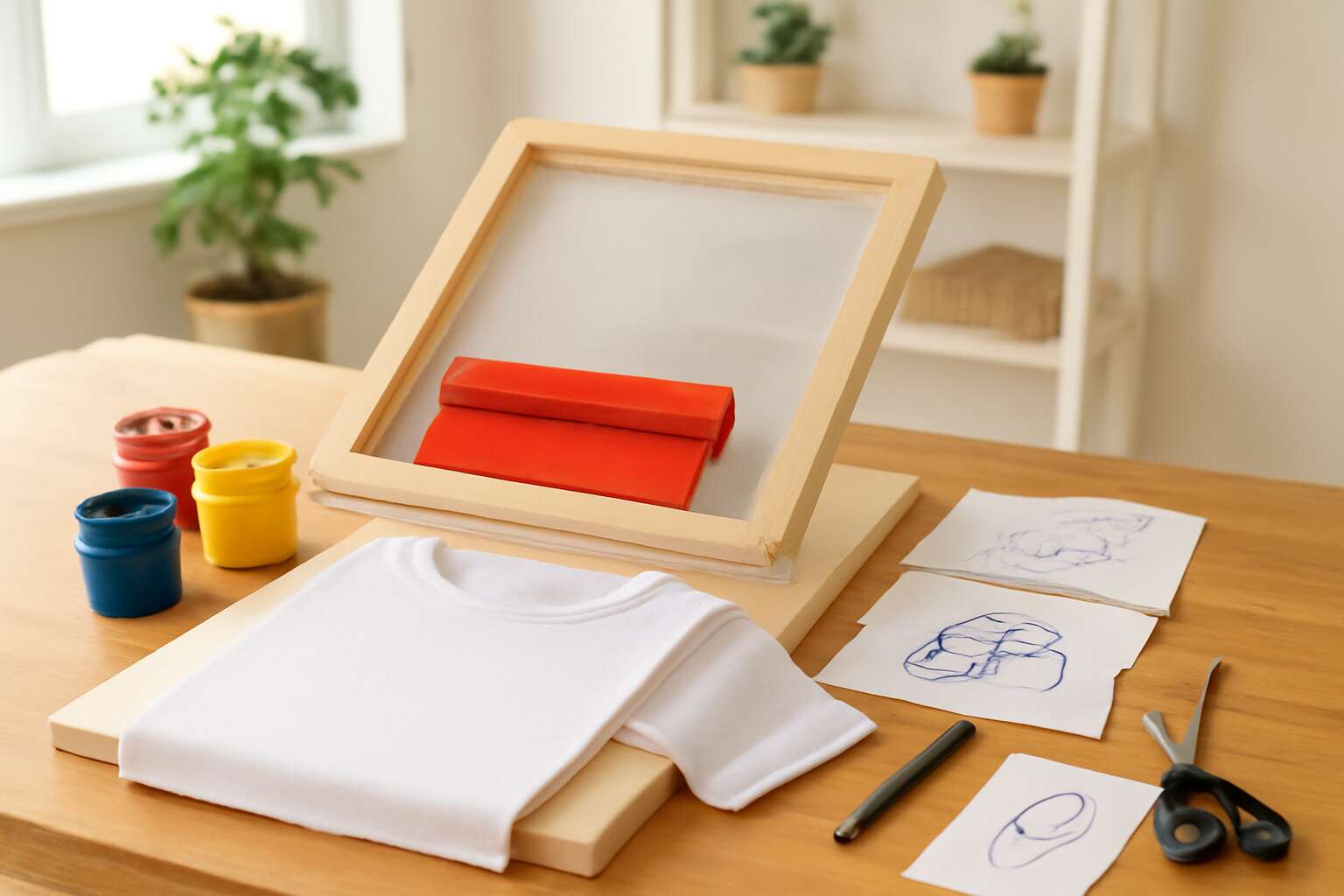
Fundamentals of screen printing and planning a home setup
Understanding screen printing basics for beginners
In the most unlikely corners of South Africa, a single frame can birth a brand. The craft mirrors the mind: method over speed, patience over noise. I’ve seen this section unlock fundamentals of screen printing and planning a home setup, inviting beginners to map a quiet corner of their workshop.
Understanding screen printing basics for beginners is a disciplined rhythm: prepare your screen, expose your stencil, push ink with controlled pressure, and heat-set to lock the design. For those asking how to make screen printing machine at home, start with essentials—frame, mesh, emulsion, squeegee—and a workspace bathed in light to keep the emulsion happy.
- Dedicated workspace with ventilation
- Quality screen printing materials: frame, mesh, emulsion, squeegee
- Clean drying area to avoid smudges and contamination
Plan your space with intention, treating it as a small, creative factory, and you’ll see fundamentals sharpen your instincts and reduce waste.
Planning a safe, space-efficient home workshop
<p Across South Africa's sunrise studios, enduring brands emerge from a quiet, well-lit corner rather than a din of haste. Space becomes a forge where ideas take form with deliberate calm.
Fundamentals here are rhythms: stable light, circulating air, and clear boundaries between ink, screen, and cloth. The workshop is a sanctuary where patience is the loudest tool.
Guardians of a space-efficient setup guide the imagination more than steps do.
- Illumination consistent and glare-free
- Ventilation and clean, contained zones
- Drying alcove and material containment
These elements shape flow and reduce waste in a realm where craft meets containment.
For those curious about how to make screen printing machine at home, the tale hints at a larger craft—conversion of a corner into a capable atelier.
Space, light, and air become the quiet cast of the workshop, turning constraint into character.
Choosing a screen printing press type for a beginner-friendly setup
In South Africa’s growing maker scene, compact screen-printing benches turn spare rooms into studios. The right press shapes work as much as ink does, turning a hobby into a craft with real personality.
Fundamentals blend technique with layout. Planning a home setup means balancing space, noise, and cleanup—the three Cs that decide whether a project stays playful or becomes routine.
- Manual desktop press for small runs and precise registration
- Swing-away or hinge-clamp press for easier ink access
- Compact floor-standing options if space allows
Choosing a press type for a beginner-friendly setup means matching capability to space and budget. For those curious about how to make screen printing machine at home, a dependable starter press is a wise anchor.
Budgeting and project planning for at-home screen printing
South Africa’s maker scene hums with compact studios turning spare rooms into creative hubs, where ink meets possibility. A local designer quips that ‘the best prints reveal the patient hand behind the workflow’—and that workflow begins with a thoughtful, clutter-free bench.
Fundamentals of screen printing sit at the interface of technique and layout. In a home setup, it pays to design for smooth exposure, steady ink flow, and simple cleanup. The aim is a quiet, repeatable rhythm rather than a chaotic sprint.
Budgeting and project planning carve a reliable horizon: price emulsions, screens, and inks; map maintenance and replacement cycles; set realistic milestones to prevent drift. For readers curious how to make screen printing machine at home, the path rewards prudence and durability.
- Emulsion and ink costs align with batch size
- Space-efficient storage and ventilation
- Maintenance cadence to extend equipment life
Choosing and sourcing materials for a DIY screen printing machine at home
Frames, screens, emulsions, and capillary films explained
Choosing a home setup is a quiet gamble with a big payoff. The right mix of frames, screens, emulsions, and capillary films gives you true control over texture and detail. Frames should be rigid and square; aluminum is light, timber offers a budget-friendly alternative. Screen choices range from coarse to fine mesh, matched to your ink and design complexity, so your first prints feel deliberate, not accidental.
If you’re exploring how to make screen printing machine at home, consider these sourcing pointers:
- Frames: lightweight aluminum or repurposed wood from local suppliers.
- Screens: pre-stretched polyester or nylon screens in common mesh counts.
- Emulsions: photosensitive emulsions for crisp, repeatable stencils.
- Capillary films: pre-cut, pressure-sensitive layers that speed up setup and ensure even coating.
South African hobbyists blend local shopping with online SA retailers, hunting for durability and value. With careful brand checks, you keep a steady workflow without overextending the budget.
Inks and coatings for textiles versus non-textiles
In a South African home workshop, ink choice steers the final texture and feel more than any gadget. For those curious how to make screen printing machine at home, selecting inks and coatings becomes the decisive move.
Textile inks require flexibility and wash-fastness; non-textile coatings demand rigidity and fade resistance. The pigment should breathe with the fabric or cling to the surface, a pact with the material that feels almost spiritual. Plan for fabric drape and absorbency, or hard surfaces and durable adhesion. Look for water-based or plastisol for textiles, while acrylic-based or UV-curable systems suit non-textiles. Local SA suppliers often blend economy with performance, so you can balance price against color fidelity.
Consider these categories when sourcing:
- Inks for textiles: water-based or plastisol formulations
- Coatings for non-textiles: acrylic-based or UV-curable systems
Squeegees, flood bars, blades, and other essential tools
In the heart of a South African home workshop, choosing the right tools is half the magic of screen printing. For those curious how to make screen printing machine at home, the squeegee you select will set the glide, the pressure, and the cadence of every print.
Flood bars and blades are not mere appendages; they shape the transfer. Favor stainless or hardened materials, matched to your frame width. Pick squeegees with polyurethane blades around 60–70 durometer for textiles, or harder for hard surfaces. Source SA-made or locally distributed brands to balance price and performance, ensuring you can expand your setup without surrendering quality.
Keep a compact toolbox on hand: assess edge evenness, blade wear, and part compatibility with your frame system. A small, sturdy kit saves more than cost in the long run.
- Squeegee blade material and durometer
- Flood bar length and mounting method
- Edge quality and maintenance parts availability
- Local supplier support and warranty
Sourcing tips: affordable suppliers and safety gear
South African hobby printers know the truth: the right supplier network can shave weeks off a project. A handsome setup beats brute force—66% of a smooth run is good sourcing. If you’re curious how to make screen printing machine at home, start with a lean bill of materials and a plan that fits your space and budget.
Shop local first: SA-made or locally distributed brands balance price and reliability. Safety gear is non-negotiable—goggles, gloves, and a decent mask pay off when the ink starts flying. For materials, favor sturdy components that are easy to source and replace. A smart, compact toolkit keeps you nimble and prevents weekend-athon scavenges across town.
- Affordable suppliers
- Safety gear and PPE
- Warranty and local service
Step-by-step components and assembly for a home screen printing machine
Designing a simple DIY frame and exposure unit
South Africa’s small-batch printmakers know a truth that colors every workshop: the best tools aren’t bought, they’re built. For those curious about how to make screen printing machine at home, the concept centers on modular components circling a sturdy frame and a simple, even exposure unit. A compact footprint becomes a canvas for steady, repeatable results, crafted with care rather than haste.
Key components include:
- Rigid frame and base for true alignment
- Secure screen mounting and tensioning system
- Even exposure unit with safe light distribution
- Control surface suitable for squeegee action
- Registration aids to ensure repeatable prints
Designed as a conceptual blueprint, the arrangement invites thoughtful consideration of rigidity, light-tightness, and modularity, keeping the project approachable within a modest home setup.
Screen alignment and registration for multi-color prints
Step-by-step components and assembly for a home screen printing machine revolve around modular blocks that lock into a rigid spine. The aim is crisp alignment and repeatable results, even in compact spaces. In South Africa’s driven craftrooms, the philosophy remains: we build what we need with care, not haste.
If you’re exploring how to make screen printing machine at home, keep these focal elements in mind:
- Rigid frame and true alignment rail
- Secure screen mounting and balanced tension
- Even exposure unit with safe light distribution
- Registration aids to lock color positions
The arrangement prioritizes light-tightness, modular expansion, and intuitive use, letting multi-color prints align along the same edges across runs. As with any craft, patience modulates quality; these components when considered together create a platform that breathes with your process.
Drive options: manual versus motorized systems
The workshop statistic whispers: 72% of hobbyists in South Africa report faster, crisper prints when the drive is stable and repeatable. For those asking how to make screen printing machine at home, the engines of a reliable press lie in modular, focused design.
A clean, step-by-step spine holds together rigid blocks: a true alignment rail, secure screen mounting, and a balanced tension system. Drive options anchor to that spine, offering manual or motorized propulsion depending on your space and budget.
- Manual drive: hand-cranked platen, precise control, ideal for proofs and delicate colors.
- Motorized drive: quiet stepper or DC motor, adjustable speed, repeatable cycles for larger runs.
Together, these components form a modular platform with light-tight exposure and easy upgrades, letting you scale from single-color proofs to multi-color runs without reworking the frame.
Electrical safety and basic testing before first runs
A tidy SA workshop rumor: 68% of hobbyists report crisper, faster prints when the frame tracks true and the platen stays steady.
Step-by-step components and assembly: establish a rigid base, bolt the spine, mount the alignment rail, attach the platen, secure screen clamps, and slot in the drive—manual or motorized—into the spine.
- Base frame and posts
- Precision alignment rail
- Screen clamps and platen
- Drive coupling and guards
Electrical safety and basic testing before first runs: unplug, route wires with strain relief, check continuity and insulation, ensure a grounded outlet, fit a fuse, and perform a dry test before ink.
If you’re curious how to make screen printing machine at home, this blueprint fits your space.
Operating techniques and maintenance for quality home prints
Artwork preparation and screen setup workflow
Prints that linger begin with a bold question and a patient hand. In a South African home studio, the moment ink touches fabric becomes a story stitched into the day. ‘Quality is a habit,’ as the old design saying goes, and this habit starts with a setup. If you’re wondering how to make screen printing machine at home, cultivate a rhythm that respects space, ink, and intention.
Operating techniques and maintenance chase consistency in every run. Clean lines start with steady tension and quick, thorough cleanups.
Artwork preparation and screen setup workflow follows a careful, repeatable path. Prepare clean artwork, separate colors, and mark registration. Align with a simple jig, test print, and adjust squeegee pressure. This calm sequence keeps prints faithful to the original.
Printing techniques: transfer, speed, and pressure for consistency
“Quality is a habit,” they say, and in a South African home studio that habit shows up as quiet focus, steady tension, and ink that lands with intention. The moment prints begin to sing is when consistency becomes second nature, not luck!
Operating techniques and maintenance chase this consistency in every run. Clean lines start with steady tension and quick, thorough cleanups. The cycle is simple: maintain registration, monitor ink transfer, keep squeegee pressure and speed even, track ink viscosity, and wipe down between colors.
- Uniform screen tension and frame integrity
- Consistent squeegee pressure across strokes
- Regular cleaning to prevent ink buildup
- Registration checks between runs
If you’re curious how to make screen printing machine at home, the answer lies in a disciplined maintenance rhythm that respects space, ink, and intention.
Troubleshooting common defects and fixes
Every print counts, especially in a compact South African home studio where space is tight and taste outpaces gadgetry. A disciplined maintenance rhythm can boost consistency noticeably. If you’re curious how to make screen printing machine at home, start with habit: inspect, wipe, and tune before you pull a single squeegee. That simple cadence—quiet attention, careful tension, ink laid with intent—turns each run into reliable practice rather than a gamble!
Operating techniques hinge on steady routines. I find small tweaks—keeping the frame square and maintaining even stroke contact—pay off across long runs. Wipe between color changes. These steps cut smudges and keep alignment reliable in a home setup.
- Ghosting on prints—faint carryover hints at exposure and stencil sealing considerations.
- Color misregistration—frame integrity and mark alignment come into play when colors drift.
- Ink pooling or feathering—edge control and ink balance define clean fills and sharp edges.
Maintenance routines and workspace organization for longevity
A compact South African home studio hums with quiet potential; discipline turns each pass into practice. If you’re curious how to make screen printing machine at home, start with a simple ritual: inspect, wipe, and tune before the first squeegee kiss of ink. That cadence—measured attention, precise tension, ink laid with intent—transforms every run from gamble to craft.
Operating techniques hinge on steady routines. Small adjustments—keeping the frame square, maintaining even stroke contact, and preserving consistent pressure—reward long runs with steadier registrations. Wipe between color changes to curb smudges and preserve alignment in a tight workspace.
Maintenance and workspace organization underpin longevity. A dedicated, well-lit zone, labeled tools, and a simple habit of putting things back where they belong make days smoother and gear more reliable.
- Space planning and layout
- Tool organization and labeling
- Regular cleaning and protection

0 Comments