Laser-Driven T-Shirt Printing Technology
What is laser printing for apparel and how it works
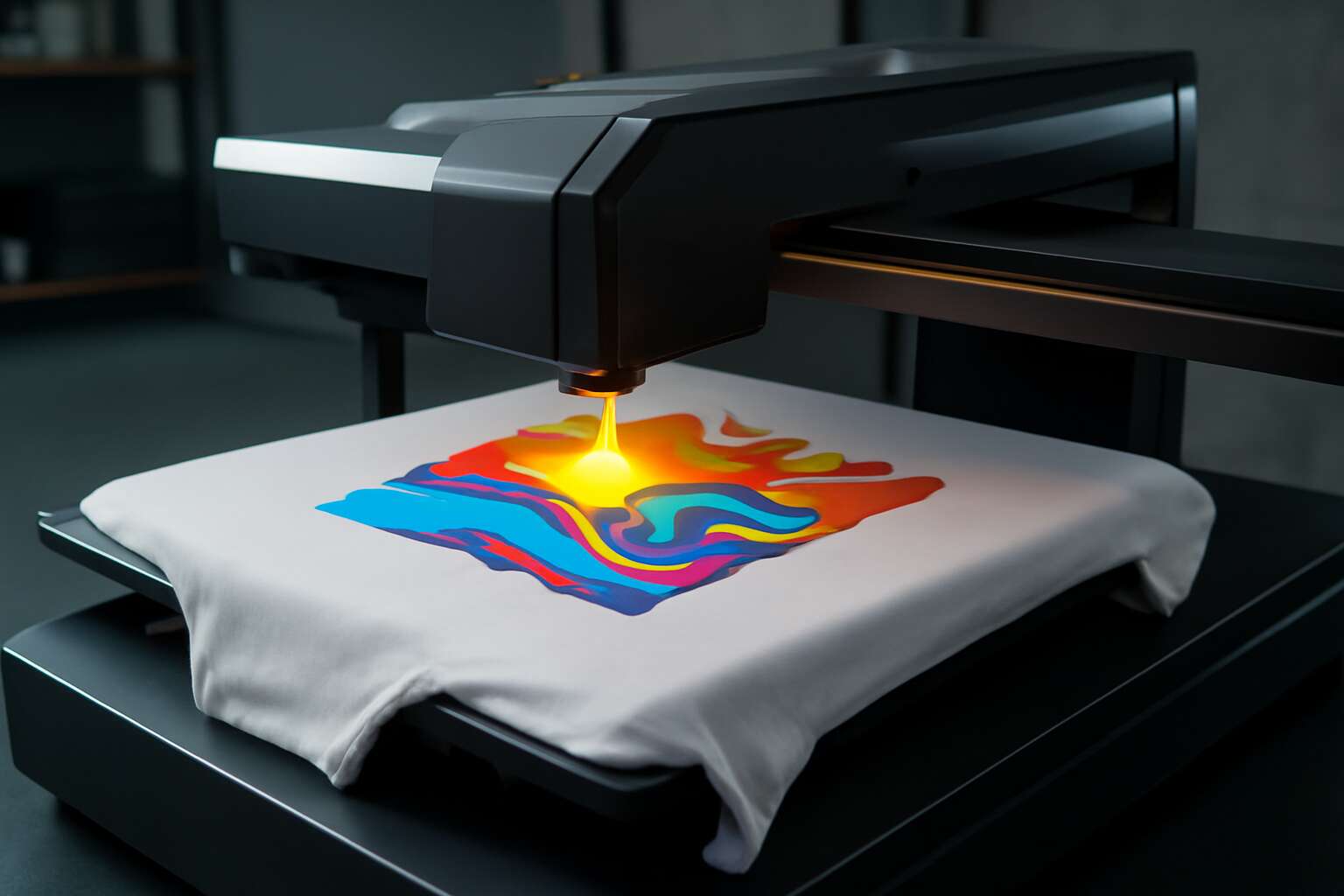
Laser-driven t-shirt printing is quietly shifting the goalposts of apparel production. In South Africa, the demand for personalised tees is brisk, and the laser approach delivers cleaner edges, crisper graphics, and far less mess than traditional methods. The result is garments that pop on camera and politely refuse to shrink in the wash.
Key facets of the process include:
- Non-contact precision that preserves fabric feel
- Minimal setup and rapid changeovers, reducing waste
- Broad fabric compatibility and vibrant color handling
A modern t shirt printing machine laser unlocks control over depth, contrast, and throughput, letting South African brands respond to trends with astonishing speed.
Core components of a laser printing system for garments
SA’s rise in personalised tees isn’t just a trend—it’s a data point. A double-digit spike in demand has brands rethinking production, and the t shirt printing machine laser sits at the heart of that shift, delivering precise edges and vibrant results without the mess of older methods.
Core components of a laser garment system include:
- Laser source and wavelength tuned for textiles
- Beam delivery and focusing optics
- High-precision motion system and bed
- Control software and intuitive user interface
- Cooling, shielding, and safety interlocks
- Fabric handling and compatibility software
With these elements in place, brands can tune depth, contrast, and throughput to meet fast-moving South African fashion cycles.
Benefits over traditional methods like screen printing and heat transfer
Around South Africa’s growing on–demand scene, brands are learning speed can still feel soulful. The t shirt printing machine laser has become the quiet workhorse behind vibrant tees and precise edges, turning crowded workshops into spaces where craft and commerce walk hand in hand. I’ve watched fabric breathe as colors stay true and messy setup waste vanishes—a welcome relief after older methods. It’s a gentle light that speaks to cloth, delivering durable prints with a soft, wear-anywhere hand.
Here are the standout benefits:
- Sharper edges and vibrant color depth without screens or transfer layers
- Less water use and waste, cleaner production floors
- Faster changeovers and higher throughput for demand spikes
- Gentle on fabrics, preserving a soft hand feel and comfort
From townships to town squares, this technology helps tell local stories in a new, luminous light.
Primary use cases and market applications
South Africa’s on-demand tee scene hums with a quiet intensity—demand has surged, outpacing traditional runs by a double-digit margin. The t shirt printing machine laser is its unassuming heartbeat. I watch it in studios from Cape Town’s backstreets to Johannesburg’s markets, turning raw visions into wearable weather. The primary use cases unfold as chapters: complex, high-contrast graphics, seamless color gradients, and razor-sharp typography etched directly onto fabric—no screens, no transfer layers, just the cloth surrendering to light. That is the t shirt printing machine laser at work, a quiet herald of speed and soul.
Markets lean on this technology for rapid branding and limited-edition runs. Here are the common paths:
- On-demand fashion collections for boutique labels
- Corporate event merchandise and team wear
- Community projects and school clubs telling local stories
- Artist collaborations and limited-edition drops
Performance metrics to evaluate early on
In South Africa, on-demand tees surged 38% last year, a quiet revolution rippling through studio spaces from Cape Town’s backstreets to Johannesburg markets. The t shirt printing machine laser is the quiet engine behind that momentum, turning raw visions into wearable weather. Its glow is patient and precise, a lighthouse guiding small brands toward bold, tangible identity.
Early performance metrics should focus on how the system holds up under test runs: print resolution and edge fidelity, throughput per hour, color fidelity in gradients, and wash-fastness on common fabrics. Stability of laser power, scorch risk, and material compatibility quietly reveal whether this technology will scale with a label’s ambitions.
Key metrics to assess in pilot batches:
- Resolution and edge clarity
- Throughput per hour
- Fabric compatibility and wash-fastness
Choosing the Right Laser T-Shirt Printing Machine
Key specifications to compare: laser type, power, and speed
In South Africa, the apparel customization boom is real—shops report up to 40% faster turnarounds when they upgrade to laser-based printing. The t shirt printing machine laser you choose should align with your fabrics and production pace, and that means weighing three core specs: laser type, power, and speed.
Here’s how these specs translate to real-world results:
- Laser type: CO2 for cotton and blends; fiber or diode options suit specialised synthetics.
- Power: higher wattage increases engraving depth and throughput but risks scorching on delicate fabrics—match power to material and tolerance.
- Speed: faster speeds raise output yet can compromise edge quality; aim for a balance that suits your design complexity and batch size.
Beyond the numbers, consider maintenance, local support networks, and the long-term cost of ownership. A robust system that pairs reliable cooling with easy access to parts helps keep operations steady in busy South African workshops.
Materials compatibility and energy efficiency
In South Africa, the apparel customization boom is real—shops report up to 40% faster turnarounds when they upgrade to laser-based printing. Choosing the right t shirt printing machine laser hinges on materials compatibility and energy efficiency, paired with the pace of production and design complexity.
Materials compatibility isn’t cosmetic. It means testing swatches, understanding how fabrics respond to heat, and anticipating post-print finishes. Some blends crave gentler settings; others tolerate deeper engraving. The goal is to preserve hand feel while delivering crisp edges.
Energy efficiency touches the bottom line and the planet. Seek robust cooling, smart power management, and predictable maintenance that keeps cycles flowing in busy shops.
- Efficient cooling design reduces thermal drift.
- Low standby power and auto-shutoff features save energy between jobs.
- Strong local support networks and readily available spare parts minimize downtime.
With these considerations, the t shirt printing machine laser becomes a long-term partner rather than a tool that simply sits on the shelf.
Total cost of ownership including maintenance and consumables
Turnaround times drop dramatically—up to 40% faster—when shops upgrade to a laser-based setup in South Africa. Choosing the right t shirt printing machine laser means weighing up-front price against long-term costs, maintenance cycles, and consumable needs. It’s not just about speed; the right pick sustains quality across busy runs and varied fabrics.
Total cost of ownership includes initial purchase, maintenance, and consumables.
- Initial price vs. financing options
- Scheduled maintenance and service intervals
- Consumables and replacement parts
- Downtime costs and energy use
Choose suppliers with strong local support and clear warranties; energy-efficient cooling and auto-off features cut ongoing expenses.
Vendor support, warranty, and service networks
Downtime is costly in a busy print room—so the right t shirt printing machine laser can change the whole equation. In South Africa, shops backed by robust vendor support report smoother runs and quicker turnarounds. “Reliability is the real differentiator,” says a veteran operator, and that truth lands hard when a service team answers fast and on schedule.
Choosing the right solution means weighing warranty, support, and service networks as carefully as the specs.
- Local support network with trained engineers and fast response times.
- Transparent warranty terms and clear coverage for parts and labor.
- Easy access to genuine replacement parts and qualified technicians.
With the right vendor ecosystem, uptime stays high and prints keep their edge across peak runs—like a quiet guardian over your production.
Software ecosystem, firmware updates, and workflow integration
In South Africa’s vibrant print rooms, the t shirt printing machine laser becomes a partner in progress, braided with a living software ecosystem that breathes with every production cycle. Firmware updates arrive like quiet rain, sharpening speed, color fidelity, and reliability, while workflow integration threads data from design to delivery into a single, seamless tapestry.
- OTA firmware updates delivered over secure networks
- Open APIs for seamless workflow integration
- Cloud-based color management and asset libraries
Choosing the right system means noting how software scaffolding supports every print cue and path. Robust integration with design tools, scalable licenses, and predictable updates turn complexity into quiet elegance on peak runs.
Materials, Garments, and Design Capabilities
Best fabrics for laser printing and garment prep
In a country obsessed with color, a single pass of light rewrites a tee. The t shirt printing machine laser becomes a heartbeat for fabric and imagination, lifting cotton’s texture into conversation and carrying a dream from SA studios to coastlines across the country.
Best fabrics for laser printing start with controlled fibers and steadiness. In SA studios, cotton and blends, light jerseys, and bamboo-infused fabrics tolerate the heat when garment prep includes lint removal and light pre-pressing.
- 100% combed cotton
- poly-cotton blends
- recycled polyester
Garment choices shape how the laser performs. Heavier tees yield crisper edges; lighter fabrics welcome subtle lines and shading, perfect for bold color blocks and clean typography—ideals for SA fashion waves.
- pinpoint vector engraving
- halftone gradient control
- multi-layer stacking
Design capabilities unfold with every pass, and I see fabrics become canvases that carry a resilient, vibrant South African dream.
Color accuracy, resolution, and edge quality
Materials form the silent language of a laser’s kiss on fabric. When the t shirt printing machine laser meets fibers—cotton, blends, or bamboo-infused textures—the result is color that holds and edges that breathe. In this climate, controlled heat and gentle garment prep preserve memory and ink integrity for long-lasting vibrancy.
Garments shape the line of the design. Heavier tees yield crisper edges; lighter knits welcome shading and precise typography. A thoughtful garment choice pairs with the machine for faithful color reproduction and durable outlines that withstand wear, wash, and sun—from SA studios to coastlines across the country.
Design capabilities unfold with every pass, turning fabrics into living canvases. Color accuracy, resolution, and edge quality take center stage as the machine orchestrates gradients, halftones, and typography with quiet finesse. The result is bold, resilient imagery that travels from SA studios to coastlines across the country.
Handling delicate materials and post-processing options
Materials act as the silent partner in a t shirt printing machine laser session. Delicate fibers demand controlled heat, stable tension, and meticulous garment prep—pre-washing, tape-down, and even platen spacing—to honor memory and ink integrity across South Africa’s climate.
Garments shape the line of the design. Heavier tees yield crisper edges; lighter knits welcome shading and precise typography. A thoughtful choice pairs with the machine for faithful color and durable outlines that withstand wear, wash, and sun in studios from Joburg to the coast.
Design capabilities unfold with every pass on the t shirt printing machine laser, turning fabrics into living canvases. Color accuracy, resolution, and edge quality take center stage as gradients, halftones, and typography emerge with quiet finesse.
- Pre- and post-curing settings
- Cooling and handling after laser exposure
- Post-wash stabilization
- Color-lock finishes
Design files, vector vs raster, and color management
Across South Africa’s studios, materials act as the quiet governors of a t shirt printing machine laser session. Delicate fabrics demand controlled heat and stable tension—pre-washing, tape-down, and exact platen spacing—to preserve ink integrity from Joburg’s glare to the coast’s sun.
Garments determine the line and depth: heavier tees yield crisper edges, lighter knits invite subtle shading and typography. Design files move through the laser with purpose: vectors hold sharp outlines, rasters render gradients, and color management keeps hues faithful from proof to fabric.
- Vector vs raster: when to choose each
- Color spaces and conversion practices
- Fonts, outlines, and anti-aliasing tips
With thoughtful pre- and post-processing, the t shirt printing machine laser delivers durable, wash-fast results that endure South Africa’s sun and wash cycles. Edge quality and color integrity emerge as the true benchmarks of design capability.
Common limitations and how to mitigate issues
Materials in South Africa’s studios steer heat and tension during runs. Cotton and cotton-poly blends require pre-washing and moisture control; unwashed fabrics shrink unpredictably, altering alignment and ink penetration. Pre-stretching and tape-down help hold fabrics true as the laser moves, preserving edge quality from Johannesburg’s glare to Cape Town’s sun.
Garments determine line and depth; heavier tees yield crisper edges, lighter knits invite subtle shading. Design workflows with vectors for sharp outlines and rasters for gradients; color management keeps hues faithful from proof to fabric, ensuring the t shirt printing machine laser respects the garment’s personality at every pass.
- Material stability and fabric behavior can influence edge fidelity and ink penetration.
- Platen alignment and fabric tension affect registration and skew in prints.
- Laser parameters interact with different textiles, impacting scorching and shading.
- Color consistency requires careful management to translate proofs to fabric.
- Post-processing behavior, like curing and washing, affects durability and appearance over time.
Installation, Safety, and Maintenance
Space planning, ventilation, and electrical requirements
In South Africa’s bustling print rooms, space is currency and planning is romance. A t shirt printing machine laser deserves respect: misplacing a beam can ruin a run and a reputation. Installation, safety, and maintenance aren’t afterthoughts; they set the tempo for creativity and uptime!
- Space planning: allocate clear access, stable mounting, and room to grow.
- Ventilation: ensure adequate fume extraction and air exchange.
- Electrical requirements: compliant wiring, grounding, and surge protection with local standards.
Maintenance and safety share a language: professional checks, dust control, and SA safety norms. The result is steadier performance and fewer surprises from the t shirt printing machine laser.
Routine maintenance, cleaning, and part replacement
In SA, downtime in print rooms can cost thousands per hour. Installing a t shirt printing machine laser isn’t a casual plug-and-play moment—it’s choreography. Place it on a solid base, align with a spirit-level, and leave space for cables and ventilation. A careful install minimizes beam drift and protects your reputation from the inevitable ‘oops’ moments.
Safety isn’t cosmetic; it’s uptime’s tempo. Fit protective housings, enable interlocks, and post clear warnings. Train operators on safe startup, laser indicators, and emergency stops. Ensure fume extraction and SA-compliant risk assessments are part of toolbox.
Maintenance keeps the performance locked in. Schedule routine cleaning of lenses, check cooling fans, and swap worn seals or filters before they bite you on a busy run. The t shirt printing machine laser rewards steady care with reliable output.
Safety protocols, eye protection, and laser classification
In South Africa’s print rooms, downtime costs can climb into thousands per hour, so installation is choreography. Place the t shirt printing machine laser on a solid base, level it, and leave room for cables and ventilation. Careful setup minimizes beam drift and protects your reputation from ‘oops’ moments.
Safety isn’t cosmetic; it sets uptime’s tempo. Fit protective housings, enable interlocks, and post warnings. Train operators on safe startup, indicators, and emergency stops. Ensure fume extraction and SA-compliant risk assessments. Understanding laser classification helps tailor signage; eye protection matters daily.
- Always wear SA-approved laser safety glasses rated for the class of equipment in use.
- Keep protective housings closed and interlocks engaged during operation.
Maintenance keeps performance locked in. Regular cleaning of lenses, checking cooling fans, and replacement of worn seals or filters are part of routine care. This discipline yields dependable output and longer tool life.
Troubleshooting common performance and alignment issues
Solid footing and precise leveling matter in any workshop, from Jo’burg to a Free State shed. Install the t shirt printing machine laser on a rigid base, leave room for cables and ventilation, and plan for routine alignment checks. A well-set foundation minimizes drift and preserves textile detail over long runs.
Safety is the quiet partner of uptime. In SA workshops, protective housings stay in place, interlocks remain engaged, and warnings stay posted. Ensure SA-approved eye protection is worn daily. Train operators in safe startup and emergency stops, and carry out risk assessments.
Maintenance troubleshooting often reveals a handful of culprits. When output falters or alignment drifts, common causes include lens contamination, miscalibrated focus, cooling shortfalls, worn seals or filters, and aging cabling or interlocks. These factors shape consistency; addressing them helps hold steady performance.
- Lens cleanliness and focal length alignment
- Cooling and ventilation performance
- Cabling, interlocks, and air lines integrity
Best practices for long-term reliability and uptime
Installation discipline turns an ordinary press into a dependable workhorse. In SA workshops, uptime rises by as much as 20% when the station sits on a solid base, with clean air and space around it. The t shirt printing machine laser then becomes a steady beacon, preserving textile detail across long runs and shifting light.
- Lens cleanliness
- Cooling and ventilation performance
- Cabling, interlocks, and air lines integrity
Safety is the quiet partner of uptime. In SA workshops, protective housings stay in place, interlocks stay engaged, warnings stay posted. Ensure SA-approved eye protection is worn daily and that risk assessments keep pace with changes.
Maintenance whispers the truth of longevity. When output falters or drift sneaks in, common culprits include lens contamination, miscalibrated focus, cooling shortfalls, worn seals or filters, and aging cabling or interlocks. Addressing these keeps the flow smooth.



0 Comments