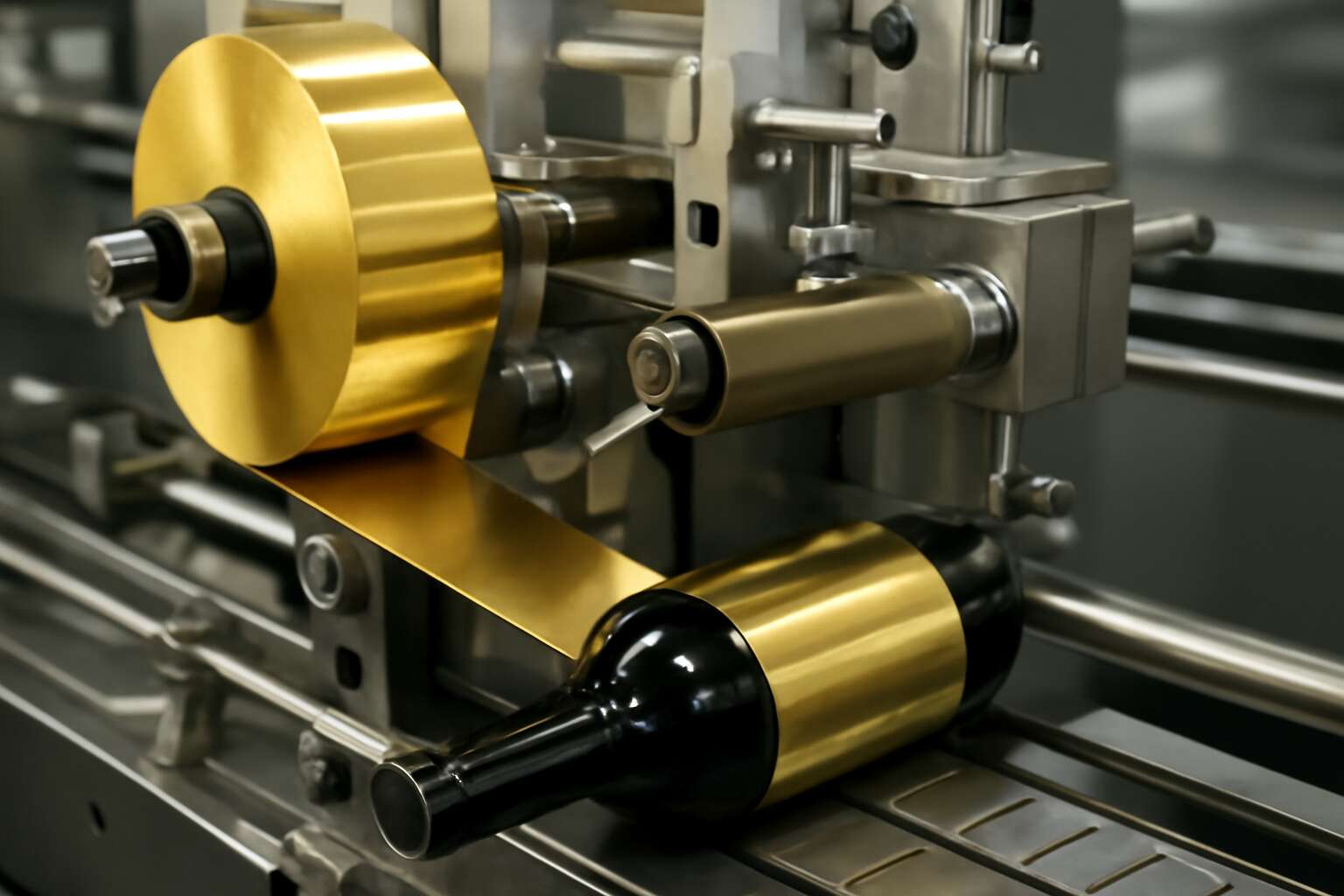
Overview of Gold Label Printing Technology
How gold label printing works
In South Africa’s bustling retail aisles, a label can seal a sale. ‘Labels are the handshake between brand and buyer,’ a printer told me, and that rings true today. A gold label printing machine fuses artistry with engineering, delivering a persuasive shimmer that draws the eye.
This setup uses hot-foil stamping and digital embellishment to apply metallic finishes with precision. Substrates range from cartons to plastics; the process relies on clean registration, temperature control, and consistent foil feed. The result is a durable gleam that communicates quality at a glance.
- Fashioned metallic foils for premium finishes
- Precise registration for exact alignment
- Flexible substrates with controlled heat management
How it works: The gold label printing machine guides a sheet through a heated die that transfers foil to the surface. Embossing, UV curing, and automated foil replenishment maintain speed and consistency. Craft and control converge, delighting discerning customers across South Africa.
Key components and their roles
Three seconds is all a shopper gives a label to decide trust, and in South Africa’s bustling aisles the gold label printing machine stands as a shadowed sentinel of quality. It fuses myth and mechanism, turning dull cartons and plastics into gleaming enticements that whisper of craft. I have watched its shimmer rise from the bed of rollers, a dusk-lantern guiding the eye and sealing the deal with a flicker of gold.
Key components and their roles:
- Foil supply system: feeds foil with precision.
- Temperature-controlled die: delivers exact heat for transfers.
- Registration sensors: ensure exact foil alignment.
- Impression cylinder: presses firmly yet gently on the surface.
- Substrate handling: guides through a stable path.
- Automation controller: coordinates speed, foil replenishment, and checks.
Together, these components give the gold label printing machine its enduring glow—a durable shimmer that signals premium, long after the pack is shelved.
Materials and substrates suited for gold labeling
In a market where a shopper’s verdict is formed in three seconds, the gold label printing machine turns packaging into a beacon of trust. The shimmer isn’t just cosmetic; it’s a promise of craft, consistency, and lasting shelf presence across South African aisles.
Gold labeling relies on hot foil stamping or modern cold foil methods, pairing gold foil with a precise carrier and a smooth surface. The result is a durable imprint that catches light and signals premium quality without shouting.
- Coated paper and paperboard for cartons and labels
- Smooth PET film and other clear plastics
- Polypropylene (PP) and rigid PVC with strong surface finish
- Metallic or transparent substrates for high-end accents
With these materials, brands in South Africa conjure a durable glow that survives the long trek from factory floor to shelf.
Print quality metrics to watch
Three seconds is all a shopper needs to decide whether a product earns a second glance. The gold label printing machine turns that moment into a cue of quality, delivering a precise, light-catching foil that signals craftsmanship rather than gimmick.
When evaluating print quality, look for gloss uniformity, crisp edge fidelity, and consistent foil lift. These metrics separate premium labels from faint reflections and tell you if the imprint will survive shelf-side handling.
- Gloss uniformity and specular reflection
- Edge registration and foil creep
- Adhesion durability and rub resistance
- Substrate compatibility and surface smoothness
Beyond the surface, durability tests and measurement techniques—like gloss units on a spectrophotometer and adhesion pull tests—reveal whether the result will endure the long journey from factory to South African shelves.
Common limitations and mitigation strategies
On South African shelves, a single gleam can tilt a buyer’s gaze. Even subtle foiling quirks—registration drift, edge bleed, or heat sensitivity of the substrate—test the limits of gold label printing technology. The gold label printing machine blends precision with poetry, delivering controlled foil lift and crisp edge fidelity, while demanding careful setup and steady maintenance to keep the shine truly first-rate.
Common mitigations orbit around preserving surface harmony and long-term stability, rather than quick fixes. Strength in this realm comes from refined process control, careful material selection, and dependable system calibration that respects the lamination of shine and durability.
- Enhanced process control that reduces registration drift and foil creep
- Material compatibility considerations between foil, ink, and substrate
- Stable environmental conditions to prevent premature wear
- Maintenance philosophies that prioritize reliability and repeatability
Types of Gold Label Printing Equipment
Desktop vs industrial machines
On South Africa’s buzzing packaging floors, a touch of gold can lift a label from utilitarian to unforgettable. Market observers note that premium finishes attract attention and can lift perceived value by up to 25% at the shelf. The choice between compact desktop gear and rugged industrial systems shapes whether a project stays nimble or scales with demand.
Desktop setups offer charm in a compact footprint. They are budget-friendly, quick to set up, and ideal for proofs, concept runs, or small-batch production. A gold label printing machine on a benchtop fits easily beside design software and a coffee mug—perfect for creative studios and boutique brands looking to test ideas without a warehouse.
Industrial machines answer the call of scale. They endure long runs, deliver consistent output, and adapt to a wider range of substrates with minimal fuss. When volumes soar, automation and integrated quality checks become allies.
Digital vs foil-based methods
In South Africa’s bustling packaging floors, a gold label printing machine can transform a concept into shelf-ready perfection. “Gold is storytelling you can touch,” a brand manager told me, and the impact isn’t merely cosmetic. Digital workflows, for small runs, can trim setup times by up to 40%, accelerating proofs and campaigns.
Digital methods use HD metallic inks or digital foil transfer, offering nimble changeovers and data-driven customization—ideal for proofs and limited runs. Foil-based approaches—hot-stamp or cold-foil—deliver deeper gloss and rugged durability for longer runs and broader substrate compatibility.
- Choose digital for fast iteration, variable data, and lower upfront costs.
- Opt for foil-based for maximum gloss, abrasion resistance, and volume efficiency.
- Mix both: pilot in digital, scale in foil as demand grows.
A strategic choice between digital and foil-based methods shapes whether projects stay nimble or scale with demand—and that is the gold label printing machine mindset at work.
Thermal transfer vs inkjet approaches
On the shop floor, the gold label printing machine is more than hardware—it signals premium the moment a label glints. Thermal transfer and inkjet approaches wear their own swagger, shaping the finish.
Thermal transfer relies on ribbons and heat, yielding rugged gloss and broad substrate compatibility for longer runs.
- Durability and abrasion resistance
- Wide substrate range
- Higher setup cost for tiny batches
Inkjet approaches—direct-to-label printing—excel in speed, variable data, and agility for proofs and small runs. Colors stay vibrant on compatible media, though longevity depends on inks and coatings.
Choosing the right gold label printing machine means weighing speed against lasting luster and compatibility.
Maintenance needs and lifecycle considerations
South Africa’s packaging lines are unforgiving: a single delay can ripple through a shift, as if unseen forces are watching. The gold label printing machine, kept sharp, is more than hardware—it’s a living system that rewards a disciplined maintenance cadence. Preventative care blends daily checks with longer lifecycle thinking, turning small routine tasks into shields against costly downtime and missed deadlines on busy production floors.
- Daily clean and calibrate printhead
- Check belt tension and substrate alignment
- Replace consumables on schedule and track stock
- Apply firmware or software updates where applicable
Lifecycle considerations go beyond upfront price: think uptime guarantees, service contracts, spare parts availability in the South African market, and upgrade paths that protect your investment as tech evolves. When a machine crosses the two-year threshold, refurbishment or certified trade-ins can tilt the balance toward reliability, sustainability, and predictable budgeting in a volatile economy.
Emerging technologies in gold labeling
Across South Africa’s evolving packaging floors, the gold label printing machine leads with velocity and grace. Downtime gnaws at a shift; one stoppage can ripple through the line, muting output and complicating deadlines. Emerging equipment types promise nimble responses, marrying compact design with smart integration that keeps the job moving and the line listening—an almost alchemical blend of craft and code that feels powered by precision.
- Desktop and benchtop systems for small runs and rapid turnarounds
- Modular mid-range printers that scale with demand
- Industrial, high-volume lines built for rigorous packaging environments
From such diversity, the device becomes not just a tool but a partner in production poetry—where technology and artistry fuse to meet South Africa’s packaging ambitions.
Choosing the Right Gold Label Printer
Key specs to compare: speed, resolution, accuracy
In a South African packaging line, speed, resolution, and accuracy aren’t luxuries—they’re lifelines.
To compare effectively, weigh these pillars:
- Speed (labels per minute and ramp-up times)
- Resolution (dots per inch and halftone fidelity)
- Accuracy (registration, foil transfer consistency, color fidelity)
Different models balance these elements differently, so it’s essential to observe how a gold label printing machine handles high-volume runs, fine details, and substrate variability.
Substrate compatibility and material handling
In South Africa’s competitive packaging lines, downtime isn’t cosmetic—it’s costly. The substrate you pick shapes throughput, finish, and waste. Substrate compatibility isn’t mere preference; it’s a workflow decision that alters foil adhesion, drying, and overall yield. I’ve seen lines grind to a halt over the wrong substrate!
- Surface energy and coating compatibility
- Thermal and chemical tolerance
- Feeding path and tension control
- Adhesive and liner interactions
Material handling matters—store rolled stock upright, rotate stock to avoid bias, and keep the run clean and static-free. With the right pairing, a gold label printing machine delivers consistent foil transfer and color fidelity across shifts.
Budgeting and total cost of ownership
Choosing the right gold label printing machine isn’t just about upfront price—it’s about total value over time. In South Africa, downtime on a packaging line can erode margins faster than a rate hike. Think of budgeting as risk management: you’re balancing purchase price, maintenance cadence, energy consumption, and consumables. A machine that runs cleanly, taps efficient foil usage, and benefits from solid local support saves money well beyond the initial invoice.
To frame TCO, weigh these cost drivers:
- Capital cost and depreciation schedule
- Maintenance, service contracts, and spare parts
- Consumables, foil waste, and yield
- Downtime risk, changeovers, and training
- Energy consumption and overall operating efficiency
With the right pairing, investment pays steady dividends in throughput and color consistency, extending the life of the line and sharpening competitiveness.
After-sales support and service networks
South Africa’s packaging lines can’t afford unplanned pauses. A single hour of downtime can drain margins on a gold label printing machine faster than a policy change. Choosing the right after-sales support and service networks means more uptime, faster repairs, and consistent foil fidelity. Local partners with trained technicians and stocked spares keep the device humming through peak seasons and regulatory audits.
Key indicators include response times, regional reach, and proactive maintenance options.
- Local service centers with certified technicians
- Ready spare parts inventory and rapid turnaround
- Remote diagnostics and proactive maintenance alerts
- Operator training and on-site refreshers
These elements ensure steady throughput and reliable color for the line.
Vendor selection and warranties
South Africa’s production lines haunt the night shift with the threat of unplanned pauses; a single hour can gnaw away margins faster than a policy change. Choosing the right vendor for a gold label printing machine becomes a covenant of uptime and trust. Long-term warranties, regional service coverage, and a track record of rapid repairs stitch quiet reliability into the rhythm of the line. In this theatre of foil and pigment, specs matter, but promises matter more.
Consider these pillars when selecting a partner:
- Certified technicians with local presence
- Comprehensive warranties with clear terms
- Remote diagnostics and proactive maintenance alerts
- Transparent service levels, response times, and escalation paths
Partnering with a service network that blends technical prowess with dependable accountability turns the quiet hum of the line into steady throughput and confident color fidelity.
Applications and Use Cases
Branding and premium packaging
In premium retail, a single gold label can lift a product’s perceived value by a surprising margin—brands go from ordinary to something that feels crafted and exclusive. A gold label printing machine lets South African artisans and manufacturers tell a richer story on every bottle, tin, and case, catching the eye as shoppers pass by the shelf.
Applications span cosmetics, beverages, and fine foods—areas where branding and premium packaging drive loyalty. In South Africa, the attention to detail in packaging can differentiate boutique products from mass-market goods. I’ve watched labels tell stories of provenance with a shimmer that can’t be ignored. Consider these common applications:
- Premium cosmetics jars and perfume bottles
- Wines, brandies, and premium beverages
- Gourmet teas, rooibos tins, and fine foods
- Limited-edition collectibles and luxury packaging
For designers, the tactile shimmer of a well-executed foil finish on a label becomes part of the product’s personality. The gold label printing machine supports colorfast golds and durable adhesion, preserving shine from Cape sun to cooler nights, inviting customers to touch and trust the brand.
Compliance labeling and traceability
In South Africa’s sun-bright aisles, a shimmering label can carry more meaning than the logo alone. Premium foil on a label can lift on-shelf desirability by up to 30%, reshaping perception of value. A gold label printing machine puts that shimmer at artisans’ fingertips, telling richer stories on every bottle, tin, or case.
Applications for compliance labeling and traceability are where the craft truly shines. It’s not just about looks; it’s about accountability across supply chains so consumers and regulators can verify origin and batch integrity.
- Batch codes and expiry dates that endure sun and humidity
- Serialized IDs and QR codes for end-to-end traceability
- Tamper-evident seals and security features
With an eye for design and provenance, the gold label printing machine becomes part of a brand’s narrative—proof that quality can be seen, felt, and trusted.
Retail authentication and tamper-evidence
On South African shelves, trust travels faster than a label. “Proof you can feel” is more than a slogan—it’s a buying signal at the counter. A gold label printing machine puts that proof in your hands, turning premium finish into brand equity with every run.
Retail authentication and tamper-evidence matter where it counts. Use cases include:
- Tamper-evident seals that endure shipping and handling
- Serialized IDs and QR codes for end-to-end traceability
- Batch codes and expiry markers that resist sun and humidity
The gold label printing machine becomes part of a brand narrative—proof that quality can be seen, felt, and trusted. It aligns with local packaging aesthetics and supports compliance across the value chain.
Industry-specific examples: cosmetics, beverages, jewelry
In South Africa, premium packaging can lift perceived value by up to 34% at the counter, a stat that greets you on shelf when labels gleam. A gold label printing machine turns that perception into a tactile moment—glinting finishes, crisp foil, and a seal of quality you can literally feel.
Industry-focused applications spark stories across cosmetics, beverages, and jewelry. In cosmetics, satin-gold foils frame luxury jars and compacts; in beverages, micro-foil accents and durable batch codes ride through heat and humidity; in jewelry, heirloom-grade labels capture light and convey provenance.
- Cosmetics: premium, durable foil labels that endure shop, display, and travel
- Beverages: batch codes, expiry markers, and QR tags that survive cold chain
- Jewelry: luxe finishes and secure serials that reinforce authenticity
Case studies and success stories
In SA, premium packaging can lift perceived value by up to 34% at the counter—a stat that greets you on shelf as gold glints. The gold label printing machine turns that spark into a tactile moment, with glinting finishes and a seal of quality you can feel.
Across cosmetics, beverages, and jewelry, real-world case studies show how brands translate visual luxury into lasting trust. Here are quick snapshots from environments where light meets label:
- Cosmetics: satin-gold foil on premium jars deepens shelf appeal and withstands display and travel.
- Beverages: micro-foil accents and durable batch codes survive cold chain and humidity.
- Jewelry: luxe finishes paired with secure serials bolster authenticity.
These stories underline how the gold label printing machine enables premium packaging, brand protection, and consumer delight.
Maintenance, Quality Control, and Optimization
Routine maintenance checklist
“Maintenance is where the magic happens,” a seasoned craftsman likes to say. For the gold label printing machine, disciplined care translates to flawless foil, tighter tolerances, and less downtime. A well-kept setup keeps production smooth, saves costs, and preserves the premium gleam that defines your brand!
- Daily wipe and dust removal from foil paths
- Check tension on feed and foil rolls
- Lubricate bearings and moving joints
- Inspect belts, sensors, and electrical connections
Quality control ensures the machine’s promises become reality. Run sample strips, verify foil transfer accuracy, inspect edge crispness, and log any deviations. Small variances now prevent costly recalls later for the gold label printing machine.
Optimization routine means tuning speed, tension, and alignment for peak yield. Regularly compare production samples, document results, and adjust recipes to sustain consistent luster and position accuracy across runs.
Print head care and consumables management
For the gold label printing machine, disciplined care keeps foil gleam sharp and tolerances tight. Daily maintenance surfaces as a quiet guardian—foil paths stay clear, feed tension remains steady, and bearings stay smooth. A well-kept setup reduces scrap and downtime!
Quality control translates intent into reality. Observations of foil transfer, edge fidelity, and alignment become a narrative of consistency. I see deviations logged, revealing patterns that keep the finish premium and predictable.
Optimization and print head care and consumables management go hand in hand. Fine-tuned speed, tension, and alignment emerge from data, while consumables—foil and blankets—anchor lasting luster. The right approach balances performance with preservation. That balance matters for the gold label printing machine.
- Print head cleanliness supports consistent transfer.
- Consumables quality hinges on controlled aging and handling.
- Foil storage conditions influence edge clarity and brightness.
Ink and foil usage optimization
Maintenance is the quiet guardian of the gold label printing machine. Regular checks keep foil gleam sharp, tolerances tight, and bearings smooth. In South Africa’s bustling packaging scene, disciplined upkeep reduces scrap and downtime, turning routine service into a competitive edge.
Quality control translates intent into reality. Observations of foil transfer, edge fidelity, and alignment become a living ledger; deviations are logged, patterns emerge, and the finish remains premium and predictable.
Optimization anchors every material choice. Speed, tension, and alignment are tuned not by guesswork but by data, while ink and foil usage are balanced to preserve luster without waste.
- Speed decisions informed by throughput targets
- Tension and feed consistency for edge stability
- Edge alignment checks to prevent misprints
Calibration, color consistency, and quality checks
Maintenance is the quiet guardian of the gold label printing machine. Regular checks keep foil gleam sharp, tolerances tight, and bearings smooth. In South Africa’s bustling packaging scene, disciplined upkeep reduces scrap and downtime, turning routine service into a competitive edge.
Quality control translates intent into reality. Observations of foil transfer, edge fidelity, and alignment become a living ledger; deviations are logged, patterns emerge, and the finish remains premium and predictable.
- Color consistency checks across batches
- Foil transfer fidelity and edge fidelity
- Edge alignment verification and printhead interaction
Optimization calibration anchors every material choice. Speed, tension, and alignment are tuned not by guesswork but by data, while ink and foil usage are balanced to preserve luster without waste. Color consistency remains a constant metric, and routine quality checks capture drift before it reaches the finished label.
Troubleshooting common print issues
On South Africa’s bustling packaging floors, up to 20% of downtime is spent chasing foil defects. The gold label printing machine deserves a quiet, disciplined routine: maintenance that keeps bearings smooth, tension steady, and the foil gleam uncompromised. In such a climate, a well-kept machine translates to fewer interruptions and tighter tolerances that preserve brand luster.
Quality control translates intent into reality. Observations of foil transfer, edge fidelity, and alignment become a living ledger; deviations are logged, patterns emerge, and the finish remains premium and predictable.
- Foil transfer fidelity
- Edge fidelity
- Edge alignment verification and printhead interaction
Optimization calibration anchors every material choice. Speed, tension, and alignment are tuned not by guesswork but by data, while foil usage is balanced to preserve luster without waste. Color consistency remains a constant metric, and routine quality checks capture drift before it reaches the finished label.
- Common symptoms: ghosting or mis-registration
- Substrate curl or printhead wear
- Drift in color or gloss across batches

0 Comments