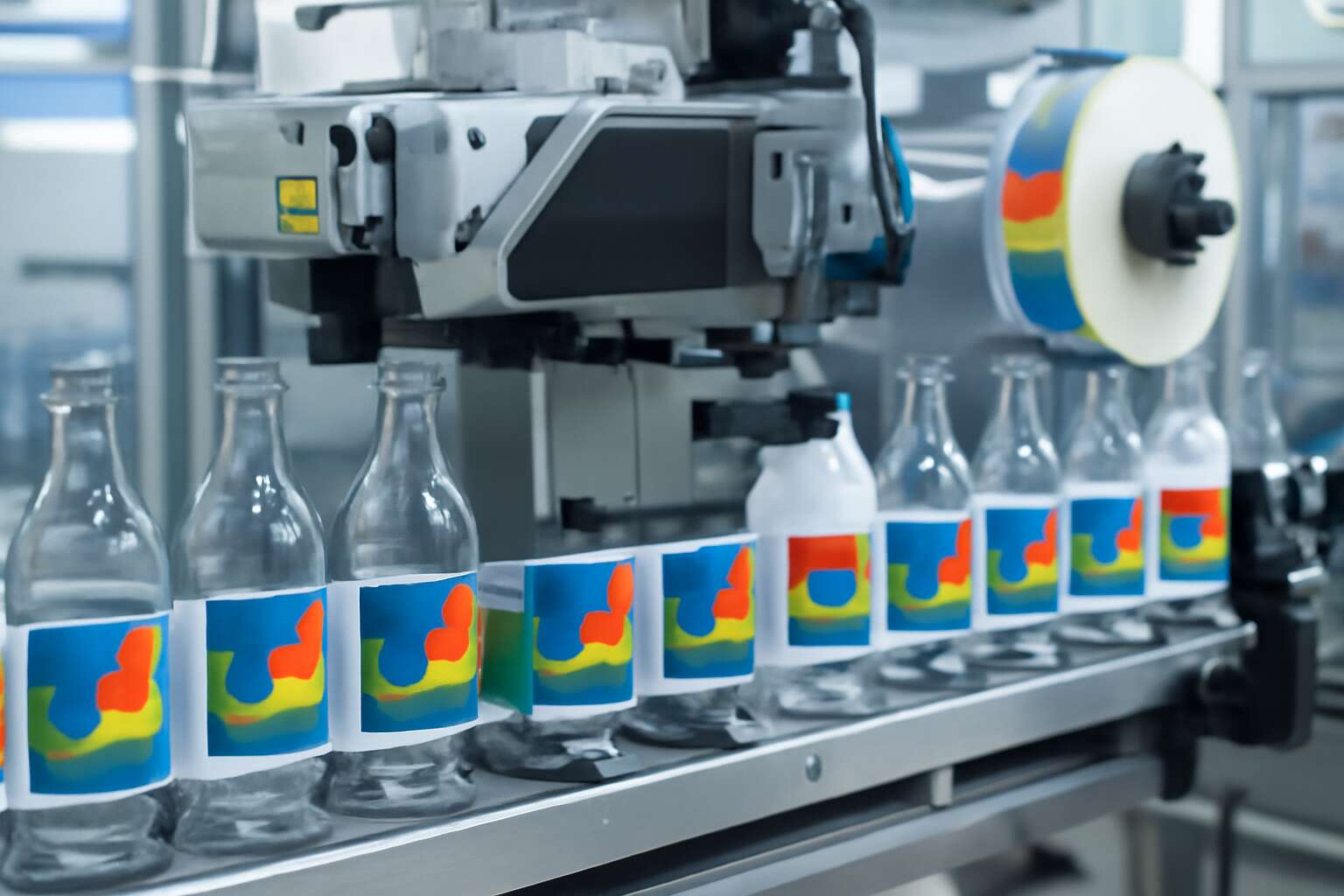
Overview of bottle labeling technology and market trends
What bottle labeling machines do and how they work
South Africa’s beverage and consumer goods sector labels billions of bottles each year, and throughput on local lines has climbed about 20% in the last three years. Bottle labeling technology now prioritizes automation, digital printing, and sustainable adhesives that cut waste and downtime, keeping pace with fast-moving supply chains and evolving consumer demands.
Label lines attach printed or pre-printed labels as bottles travel along a conveyor. Most systems use wrap-around or front-and-back labeling with optical sensors to stop, align, and apply with consistent pressure. In many plants, a label printing machine for bottles prints data on demand, then immediately applies the label and advances to the next bottle.
Key trends shaping the market:
- High-speed wrap-around configurations that handle glass and PET at wide tolerances.
- Modular, print-apply setups that integrate tightly with packaging lines.
- Sustainable adhesives and streamlined changeovers to cut waste and downtime.
Key types of bottle labeling systems
South Africa’s beverage sector moves fast, and bottling lines keep pace with a 20% throughput rise over the last three years. The label printing machine for bottles is more than a gadget—it’s a backbone for growth, enabling on-demand branding, accurate data, and less waste. The market now favours automation, digital printing, and sustainable adhesives that cut downtime while meeting evolving consumer expectations.
Key types of bottle labeling systems include:
- High-speed wrap-around units that handle glass and PET with broad tolerances
- Modular print-apply configurations that slot into existing packaging lines
- Print-on-demand systems that print data on the fly and apply immediately
Efficiency comes from tight optical sensors, reliable changeovers, and adhesive chemistry that supports recycling standards. The trend is toward hardware-software convergence: collect data, adjust print, and keep lines running under tight schedules.
Materials, adhesives, and label surfaces
South Africa’s beverage lines leap 20% in throughput over three years, and the label printing machine for bottles sits at the heart of that ascent. It’s where branding, data, and precision fuse on the factory floor, turning every label into a confident invitation to the next sip.
Technology is evolving toward modular, adaptable surfaces, with materials ranging from protective PET to elegant glass labels. Adhesives are chosen for durability yet recyclability, and surface treatment matters to ensure legibility and speed.
- Materials and label surfaces: PET, PVC, and glass compatibilities
- Adhesive types: permanent, removable, and recyclable compliant
- Surface prep: active cleaning and micro-roughness for better adhesion
Market trends tilt toward automation, digital printing, and on-demand data printing that minimizes waste. The future is a harmonious blend of hardware and software, where the same line adapts on the fly to product changes and evolving consumer expectations.
Current market trends and future outlook
South Africa’s beverage lines have surged 20% in throughput, and the label printing machine for bottles sits at the heart of that ascent, turning branding into production-ready data. On the factory floor, labels become ambassadors—bold colors, crisp type, and traceability stitched into every cap pull.
Today’s landscape leans into automation, digital printing, and on-demand data printing that cut waste and misprints. The horizon favors modular hardware and software that reconfigure on a whim, plus recyclable adhesives and legible surface treatments at speed. The future is a tidy duet of hardware and software, bending to product changes as consumer expectations shift.
Choosing the right labeling machine for beverages and container sizes
Assessing production line requirements and throughput
In South Africa’s bustling beverage market, investing in a label printing machine for bottles can be the difference between a smooth shift and a sticky standstill. On modern lines, proper labeling boosts throughput by up to 30% and reduces mislabels when speed and accuracy align.
Choose based on container sizes and label position. The machine should gracefully handle varying diameters, heights, and wrap patterns without slowing the line. A quick checklist helps:
- Container size compatibility (diameter, height, neck vs base labels)
- Changeover speed for different SKUs
- Footprint and integration with conveyors
For throughput, quantify bottles per minute, expected downtime, and future scalability. With the right settings, you align labeling accuracy with production rhythm, keeping the line efficient and compliant with labeling standards in SA markets.
Label placement options and orientation control
In South Africa’s bustling beverage market, labeling is the unsung hero—speed with accuracy is where the magic happens. With the right label printing machine for bottles, downtime and mislabels can shrink by as much as 30%, letting your line glide smoothly and your operators breathe a little easier. The goal is a rhythm where throughput and precision march to the same drum.
Choosing the right fit means sizing up container sizes, label positions, and how the wrap flows around each bottle. The machine should gracefully handle varying diameters, heights, and wrap patterns without slowing the line.
- Container size compatibility (diameter, height, neck vs base labels)
- Changeover speed for different SKUs
- Footprint and integration with conveyors
Label placement options and orientation control for beverages run the gamut—from front-face labels to full-wrap jobs and neck-label accents. When selecting a label printing machine for bottles, you’ll want orientation control that keeps labels upright and aligned as the bottle passes sensors. Precise azimuth correction and sensor feedback ensure the artwork stays crisp on every contour.
Compatibility with bottle shapes, sizes, and closures
In South Africa’s bustling beverage lines, every bottle carries a claim on time and dollars. When the right label printing machine for bottles is on the line, downtime and mislabels can shrink by as much as 30%, letting throughput rise with a calmer, more confident crew.
Choosing the fit means sizing up container sizes and how the wrap plays on each bottle. These are the knobs that determine flow:
- Container size compatibility (diameter, height, neck vs. base labels)
- Changeover speed for different SKUs
- Footprint and integration with conveyors
Beyond sizing, the machine must gracefully accept diverse bottle shapes, heights, and closures—rotational sensors, azimuth correction, and real-time feedback keep every label aligned as the line runs. I’ve watched lines shift from chaotic starts to steady cadences when the fit is right.
Total cost of ownership and ROI considerations
Downtime in SA’s beverage lines isn’t just lost minutes—it’s real rand slipping away. Choosing the right labeling machine for beverages and container sizes can cut downtime by up to 30%, and a label printing machine for bottles often delivers the cleanest wrap and most reliable adhesion.
Total cost of ownership and ROI hinge on more than the sticker price. Look at maintenance cadence, spare parts access, energy use, and how the unit integrates with conveyors. The right choice promises predictable runtimes, lower waste, and steadier line performance—critical in tight production windows.
- Maintenance and spare parts availability
- Energy consumption and heat generation
- Changeover efficiency for multi-SKU runs
In the end, ROI is a lifecycle story, not a one-time purchase price.
Printing technologies and label quality for bottles
Comparing thermal transfer, digital inkjet, and flexographic printing
In South Africa’s vibrant beverage scene, a label printing machine for bottles is the quiet engine of brand storytelling. Thermal transfer offers resin-like durability, perfect for cold storage and damp environments. Digital inkjet delivers high-definition imagery and fast setup, ideal for limited releases and rapid proofs. Flexographic printing excels in high-volume runs, delivering blazing throughput and consistent color while keeping unit costs in check.
- Thermal transfer offers durable, smear-resistant labels for cold and moist environments.
- Digital inkjet enables vibrant images and rapid proofing for limited runs.
- Flexographic printing achieves high throughput with lower per-bottle costs.
Great label quality hinges on adhesion, substrate compatibility, and color fidelity—precision that helps every bottle tell its story, from Cape Town to the Karoo.
Ensuring durability against water, oil, and UV exposure
In South Africa’s beverage aisles, the label printing machine for bottles is the quiet driver of brand trust. “The label is the product’s first promise,” a veteran packer notes, and the right print method locks ink to substrate for legible storytelling from factory to fridge.
Durability against water, oil, and UV is non-negotiable. Color fidelity and adhesion determine whether a label survives the product’s journey and still conveys the story on shelf life and heat.
- Water resistance keeps labels legible in condensate and coolers.
- Oil resistance maintains clarity during handling and minor spills.
- UV stability safeguards colors under shelf lighting and sun exposure.
- Abrasion resistance reduces wear from transport and stacking.
When selecting a label printing machine for bottles, expect robust inks, substrate compatibility, and dependable coatings that preserve brand storytelling long after packaging leaves the line.
Brand accuracy, color management, and print fidelity
Printing technologies drive the look of a bottle as surely as the cap drives the seal. For label quality, brand accuracy, color management, and print fidelity, the choice of printing technology matters more than a glossy tagline on the bottle’s bottleneck. The right method translates brand colors faithfully from screen to substrate, across glass, PET, and metal, under South Africa’s store lights and coolers alike.
The bar for color management is high: precise ICC profiles, substrate-aware inks, and robust coatings that prevent color drift through temperatures and humidity. The following elements matter on every run:
- Color accuracy across lighting scenarios
- Substrate compatibility and ink adhesion
- Consistent sealing and resistivity to wear
And the secret sauce is the label printing machine for bottles that aligns substrate, ink chemistry, and curing just enough to keep the print legible from factory to fridge, season after season!
Smart labeling features: barcodes, QR, and serialization
Three seconds on the shelf can decide a bottle’s fate. In this tight window, the label must speak clearly under South Africa’s store lights and coolers. A label printing machine for bottles handles color fidelity, substrate compatibility, and curing precision, ensuring legibility from factory to fridge.
Printing technologies shape label quality without gimmicks—digital inkjet, thermal transfer, and flexographic methods each offer different advantages for barcodes, textures, and durability. Smart labeling features are non-negotiable: they travel with the bottle and survive temperature swings and wear.
- Barcode tracking that scans at every checkout
- QR codes that link to product stories or recalls
- Serialization for end-to-end traceability
When ink chemistry meets smart curing, the label stays legible from factory to fridge, season after season!
Implementation, maintenance, and operational best practices
Integration with ERP, MES, and packaging lines
Implementation on South Africa’s factory floors demands more than a high-speed label printing machine for bottles; it requires real-time data fusion with ERP, MES, and packaging lines to guarantee traceability, accurate batch records.
Maintenance should be proactive, not reactive—daily printhead inspections, sensor checks, and careful handling of inks and adhesives. Pair these with regular calibration and straightforward SOPs, and operations stay calm under pressure, even when line speeds spike!
Operational workflows thrive when data travels freely between systems; consider these essentials:
- ERP/MES data schemas should align with the packaging line, letting labels reflect accurate recipes, lot codes, and expiry dates.
- Maintaining a cadence of system health checks helps minimize changeovers and downtime.
- Ongoing operator training and clear escalation paths support consistent print fidelity and traceability.
Local service networks keep uptime robust, with SA-centric support adapting to diverse bottle shapes and closures—ensuring your investment remains reliable.
Maintenance schedules and reducing downtime
Uptime is money. In South African factories, every idle minute on the label printing machine for bottles chips away at throughput and margins. A well-tuned label printing machine for bottles boosts uptime and reduces bottlenecks—effective implementation blends a clear maintenance cadence with predictable changeovers, so the line stays in the zone.
Maintenance and downtime are controlled by a simple, staged plan that fits your operation.
- Spare-parts kits and quick-change components ready at hand
- Condition-based checks using on-board sensors to catch wear early
- Clear SOPs and a straightforward escalation path for repairs
Regular reviews of wear items and a rolling calendar keep surprises small and fix times short. A calm, data-driven approach turns maintenance from a fire drill into a steady rhythm.
Operator training, safety, and standard operating procedures
Uptime is currency on South African factory floors, and implementation sets the tempo. A label printing machine for bottles should slot into the line with minimal fuss and a changeover rhythm so smooth the line practically hums.
Maintenance should feel routine, not reactive. Schedule quick checks, track wear trends, and empower operators to flag anomalies early.
- Structured training and on-floor coaching
- Visible safety protocols and PPE adherence
- Accessible standard operating procedures
- Line-side changeover and cleaning checklists
Operational best practices tie it all together. Foster operator ownership, run risk assessments for adhesion and overspray, and ensure calibration matches brand color fidelity over successive runs.
Spare parts planning, warranties, and service levels
Uptime is currency on South African factory floors, and a single minute of downtime can swallow a line’s margins. The goal is a smooth, barely-there integration of the label printing machine for bottles—swapovers that glide, line feedback that feels almost telepathic.
- Spare parts planning and stocking levels to cut downtime
- Clear warranties and service-level agreements with suppliers
- Accessible maintenance contracts and remote diagnostics for faster support
Maintenance should feel routine, not reactive. Schedule quick checks, track wear trends, and empower operators to flag anomalies early.
Operational best practices tie it all together. Foster operator ownership, run risk assessments for adhesion and overspray, and ensure calibration matches brand color fidelity over successive runs.


0 Comments