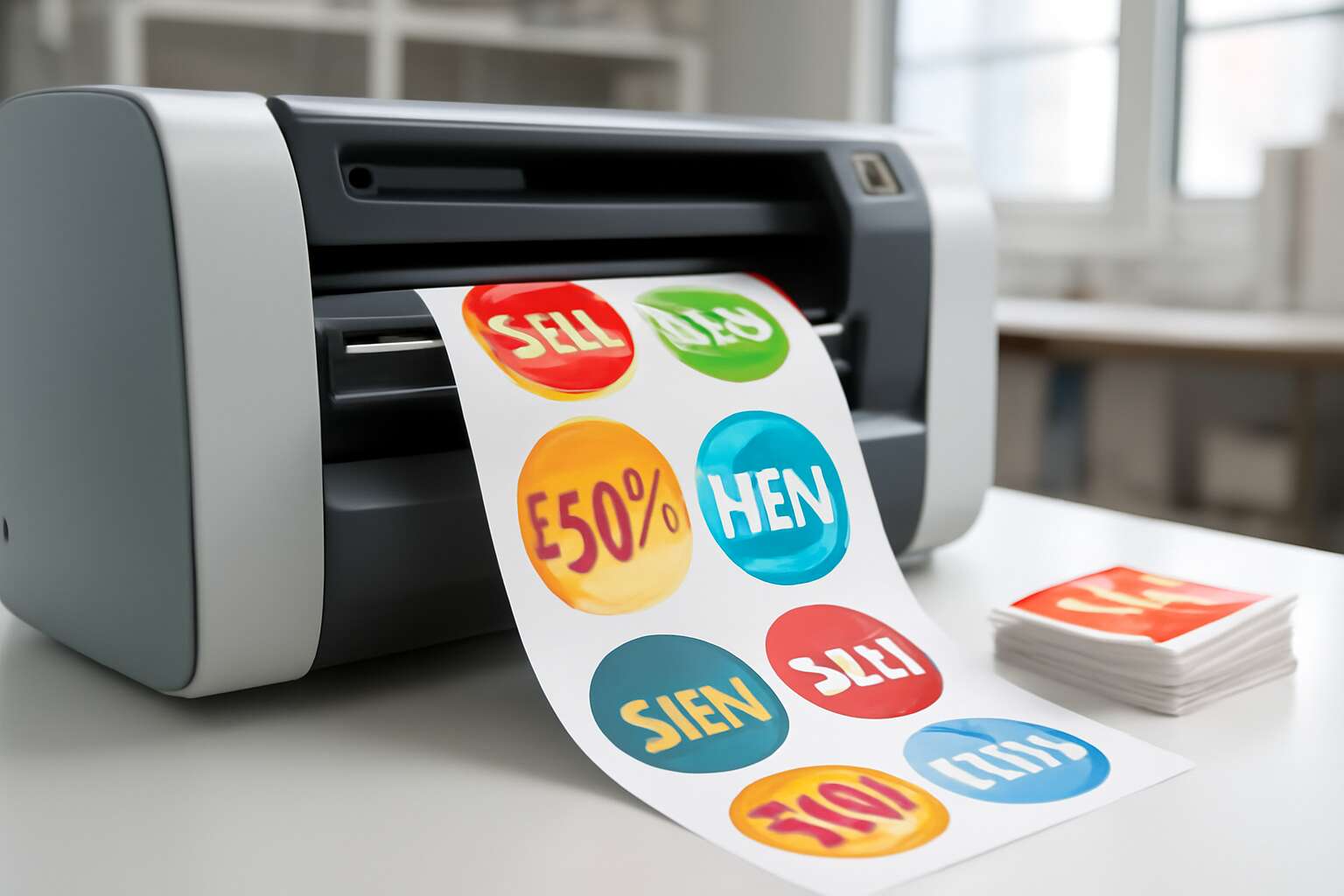
Understanding sticker printing technology and market trends for sticker printing equipment
What is a sticker printing machine and how it works
In a crowded market, precision sells. A recent industry pulse shows sticker production volumes rising as brands push fast, vibrant labels that endure packaging. Understanding sticker printing technology reveals how presses balance speed, color fidelity, and substrate versatility. A sticker printing machine product isn’t a gadget; I’ve learned this—a workflow engine that turns bold concepts into durable, shelf-ready labels.
Markets are shifting toward flexible, low-waste systems and smarter automation that fits short to mid-size runs in South Africa. To capture these shifts, consider the following elements shaping demand:
- Growing demand for short runs and fast e-commerce packaging.
- Advances in digital inkjet and UV-curable inks for outdoors.
- Local service networks and training that reduce downtime.
Digital inks, conventional plates, and hybrids let businesses tailor outcomes from gloss to matte, with color consistency across batches. With the right sticker printing machine product, South African manufacturers ride these trends while maintaining quality and cost.
Key industries driving demand for label and sticker printing equipment
Across South Africa’s shelves, label volumes have begun to surge as brands chase faster turnarounds and brighter branding. The truth is tactile: packaging now speaks as loudly as the product inside, and precision labels are central to that conversation.
Understanding sticker printing technology reveals how presses juggle speed, color fidelity and substrate variety. Digital inkjet and UV-curable inks now extend durability outdoors, while short to mid-size runs align with flexible, waste-conscious workflows that retailers and manufacturers increasingly demand.
- Short-run agility for seasonal campaigns
- Outdoor resilience through modern ink chemistries
- Local service networks that minimize downtime
With the right sticker printing machine product, South African manufacturers ride these trends while preserving quality and cost.
Evolution of sticker printing technology in recent years
A pulse from the industry shows brands slashing label-to-shelf timelines by roughly 32% thanks to modern sticker printing technology. That leap is not just about speed; it’s about telling brighter stories on every label—the tactile gloss, the punch of color, the confidence a shopper can feel at a glance.
In recent years, sticker printing technology has evolved from rugged single-pass machines into versatile systems that balance speed, color fidelity, and substrate variety. Digital inkjet heads glide across vinyl and paper; UV-curable inks resist sun and rain; smarter color management trims waste while widening the palette.
- Rapid customization for seasonal campaigns
- Outdoor-grade durability across diverse substrates
- Strong regional service networks to minimize downtime
All of this converges in the sticker printing machine product, a doorway to brands finding their own voice on shelves.
How to evaluate a sticker printer for business growth
Brands are shaving 32% off label-to-shelf timelines—yet the gain is about storytelling as much as speed. Understanding sticker printing technology helps map budget to impact: I’ve watched digital inkjet heads glide across vinyl and paper; UV-curable inks resist sun; smarter color management trims waste and widens the palette.
- Rapid customization for seasonal campaigns
- Outdoor-grade durability across diverse substrates
- Strong regional service networks to minimize downtime
From a growth view, evaluating a sticker printing machine product means weighing substrate versatility, print consistency, color fidelity, and a solid service footprint—especially in South Africa where regional support matters. Pick a system that aligns with your seasonal cadence and long-term ambitions.
The right choice lets brand voices resonate louder on shelves, with reliability as a quiet partner.
Types of sticker printing machines for businesses
Desktop vs Industrial sticker printers: pros and cons
Across South Africa’s bustling markets, a sticker’s first impression can make or break a sale; research suggests retail labeling accounts for up to 70% of shelf impact. Desktop sticker printing machines offer a welcoming economy—compact, easy to set up, and friendly to in-house design teams. They shine for small runs, rapid prototyping, and on-demand labeling, turning ideas into proof-of-concept stickers before scaling up. Yet they carry constraints: slower speeds, limited media handling, and a ceiling on long-term durability.
- Desktop advantages: cost-effective, space-saving, straightforward maintenance.
- Industrial advantages: high-volume throughput, rugged construction, broader substrate support.
- South Africa-specific considerations: local service networks, spare-part availability, and energy efficiency.
Ultimately, the choice rests on workflow tempo and total lifecycle costs. The sticker printing machine product category reveals a spectrum rather than a binary decision, inviting businesses to balance immediacy with capacity, creativity with consistency, and local support with remote capabilities.
Digital printing vs Analog methods for stickers
In fast-moving South Africa, shelf impact can decide a sale—some observers peg it at up to 70% of buying decisions when labels catch the eye. The sticker, barely a signature, is a quiet negotiator in the shopper’s mind. Digital printing offers a nimble edge—on-demand labeling, rapid proofs, and customization that fits small batches while design teams breathe easy!
Types fall into two camps:
- Digital printing: inkjet or toner-based systems that excel at short runs, variable data, and fast turnaround.
- Analog methods: screen printing and flexography that drive high durability and lower unit costs for long runs on robust substrates.
In practice, savvy South African businesses blend both approaches, choosing the path that harmonizes tempo with cost. For a sticker printing machine product, the decision hinges on run length, substrate variety, and local service coverage as much as on finish quality.
Roll-to-roll versus sheet-fed setups for sticker production
Shelf impact drives up to 70% of buying decisions in fast-moving consumer goods! In South Africa, labels that pop on sight can shorten the route from idea to shelf and tighten margins for brands navigating price-sensitive aisles.
Roll-to-roll setups push throughput on long runs and continuous label production, while sheet-fed machines excel at tight tolerances and quick changeovers for varied substrates. For a sticker printing machine product, run length, substrate variety, and local service coverage must guide the choice as much as finish quality does.
- Speed and throughput alignment with demand
- Substrate compatibility across plastics, papers, and films
- Finish options such as gloss, matte, or tactile coatings
- Automation, waste reduction, and maintenance needs
In markets like SA, regional support and parts availability can weigh as heavily as machine specs when weighing roll-to-roll against sheet-fed sticker production options.
Key features to compare in a sticker printing machine
Print resolution, color accuracy and gamut
<pAcross the label kingdoms, a design on vinyl can either sing or fade. A striking stat: 73% of buyers decide in under 90 seconds by color alone. When evaluating a sticker printing machine product, I weigh three pillars: print resolution, color accuracy, and a broad color gamut. These traits shape labels from Cape Town to Joburg.
- Print resolution: higher DPI yields crisper text and fine lines.
- Color accuracy: stable reproduction under standard light with calibration.
- Color gamut: broader gamut means richer, more lifelike hues.
Together, they guide choices: crisp edges, reliable color management, and a vibrant gamut that stays true under light. With the right setup, results feel almost magical in daily print runs.
Media handling, substrate compatibility and adhesion
In a market hungry for tangible identity, media handling tips the balance between speed, waste, and finish. In South Africa, 60% of consumer attention to packaging is driven by labels, reducing setup time and misfeeds, turning tinkering into consistent production and confident brand perception.
Media handling capabilities should span substrates with confidence: from glossy vinyl to matte paper and linerless options. Key features to compare include feed rigidity, anti-static control, and seamless calibration.
- Roll-to-roll feeding with tension control
- Sheet-fed versatility for short runs
- Scalable waste and trim management
This variety is central to the sticker printing machine product, aligning performance with real-world needs.
Substrate compatibility and adhesion decide how well the print withstands wear, weather, and cleaning cycles. Choose formulations that bond with vinyl, polyester, and PET films, and verify that the printer supports durable lamination options. In South Africa’s climate—sun, dust, heat—adhesion is an ongoing test of trust.
Ink and coating options for durability and water resistance
In a market that rewards outdoor bravado, the ink you choose is a badge of endurance. For the sticker printing machine product, durability and water resistance hinge on ink chemistry and coating strategy that withstand sun, dust, and spray from South Africa’s climate.
Key ink options to consider:
- UV-curable inks offer fast curing and excellent abrasion resistance for long-life stickers.
- Solvent and eco-solvent inks deliver strong color hold on vinyl and PET films, with proven water resistance.
- Latex inks balance environmental concerns with robust outdoor performance on a range of substrates.
Coating choices extend protection after printing, from gloss and satin finishes to protective laminates that resist scuffing and moisture, ensuring labels stay legible through cleaning cycles and heat exposure.
Automation, workflow integration and batch management
In a market that punishes hesitation, automation is a stealth advantage. Industry savants report that streamlined systems can lift throughput by up to 30% in high-volume runs, a number South African shops feel in their bottom lines.
When comparing a sticker printing machine product, focus on three pillars: automation depth, workflow integration, and batch management. The right setup keeps you in the flow from file to finished sticker, not in a maze of handoffs.
- Automation depth: from semi-automatic feeders to fully inline production with automatic laser-cutting, waste reduction, and unattended runs.
- Workflow integration: native or API compatibility with ERP/MIS, job tickets, color management and data routing.
- Batch management: robust queuing, revision history, and traceability for regulatory audits.
- Maintenance and monitoring: remote diagnostics, predictive service alerts, and consumables lifecycle tracking.
Choose a platform that speaks South African realities—local support, spare parts, and a model that scales with demand and seasonal peaks.
Maintenance, service, and total cost of ownership
South African print rooms know a harsh truth: downtime can erase a week’s profit in a single shift. In this climate, choosing a sticker printing machine product demands more than print quality—it’s a pact with maintenance, service, and total cost of ownership. The right setup turns routine care into predictable performance and safer margins.
Key maintenance and service levers to compare:
- Scheduled maintenance windows aligned to your production calendar
- Spare parts availability and local service coverage in South Africa
- Remote diagnostics, predictive alerts and consumables lifecycle tracking
Beyond the sticker price, total cost of ownership encompasses downtime costs, energy use, and consumables. A vendor offering robust local support, transparent service SLAs, and a clear spare-parts roadmap turns unpredictable peaks into manageable rhythm—vital in SA’s seasonal cycles.
Applications and ROI of sticker printing machines
Branding and packaging labels for consumer products
On South Africa’s bustling shelves, a sticker printing machine product does more than print labels—it conjures brand identity. For branding and packaging labels for consumer products, color, gloss, and texture become ambassadors, inviting shoppers to pause and trust the story behind every item.
ROI blooms when labels are produced in-house: reduced outsourcing, fewer minimums, and snappier turnarounds for promotions. The result is faster time-to-market, less waste, and stronger color consistency across SKUs, delivering tangible gains in margins within a dynamic retail landscape.
- On-demand customization for multiple SKUs without bulk orders
- Lower label production costs and reduced stock risk
- Quicker campaigns with seasonal branding changes
That small tool translates imagination into shelf appeal, turning every label into an invitation to purchase.
Promotional stickers for events and retail
On South Africa’s bustling floors, branding breathes through stickers—yes, even in the dim glow of warehouse lights. The sticker printing machine product isn’t merely hardware; it is a doorway to brand memory, a whisper that lingers on shelves and glass counters, turning ordinary labels into small nocturnes of trust!
- Promotional stickers for events and retail spaces
- On-demand labels for seasonal campaigns and pop-ups
- Durable outdoor finishes that resist South Africa’s sun and humidity
ROI blooms when production stays in-house: lower costs, fewer minimums, and snappier campaigns. Faster time-to-market means less waste and stronger color consistency across SKUs, delivering tangible margins in a dynamic retail landscape.
Customization and short-run label production strategies
In South Africa’s bustling aisles, a sticker printing machine product can rewrite a brand’s fate. A whisper of color, a memory etched on glass and cardboard, it cuts through clutter and lingers like a nocturne on shelves. Even in warehouse glow, campaigns gain speed, consistency, and presence.
Key applications and customization paths emerge:
- Event and retail branding kits
- Seasonal campaigns and pop-ups
- Outdoor labels with UV durability for Africa’s sun
- Proofed, short-run SKUs with rapid rebranding
ROI blooms when production stays in-house: lower costs, fewer minimums, faster color matching, and less waste. The method tightens banners into sharper stories, shortening time-to-market and boosting margins against seasonality.
Compliance labeling and safety standards for stickers
Across South Africa’s bustling markets, a sticker printing machine product can rewrite a brand’s fate with quick, vibrant labels. Applications span event branding kits, seasonal pop-ups, outdoor labels with UV durability, and proofed, short-run SKUs ready for rapid rebranding. ROI blooms when production stays in-house—lower costs, fewer minimums, faster color matching, and less waste.
Compliance labeling and safety standards ensure labels aren’t just eye-catching; they’re trustworthy and legal. In South Africa, align with SABS certification where applicable, include GHS hazard pictograms when needed, legible font sizes, batch/expiry data, and country-specific regulatory information.
- SABS marks for product compliance
- GHS pictograms for hazardous substances
- Batch, expiry, and lot traceability
- Clear usage and safety instructions
Together, these practices keep campaigns compliant and the brand resilient.

0 Comments