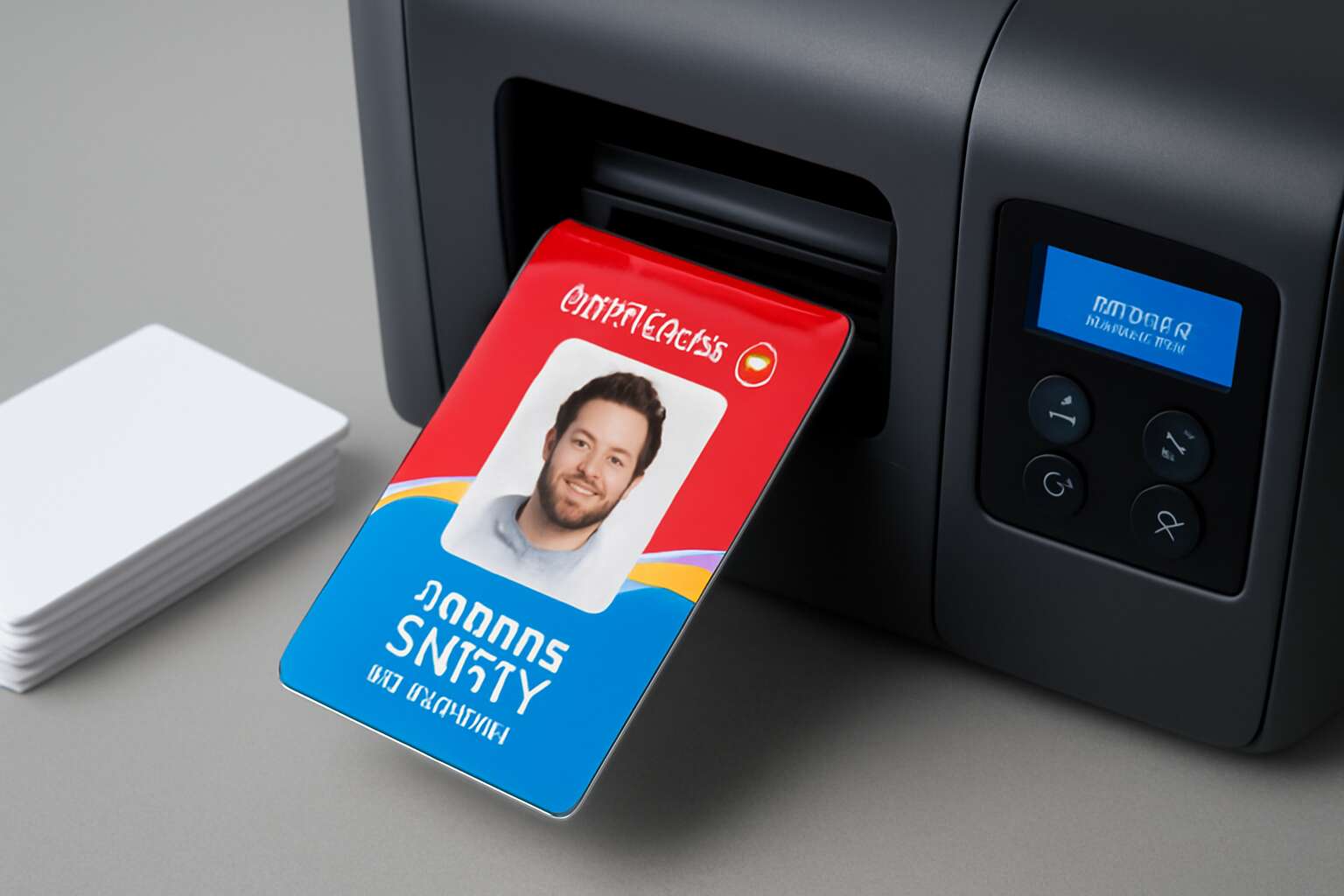
Pricing landscape for ID card printers
Overview of price ranges by machine type – A high-level map of typical price brackets across entry-level, mid-range, and professional printers.
In South Africa, nearly half of buyers say total cost of ownership matters more than the sticker price. The pricing landscape for ID card printers behaves more like a budget rollercoaster than a single figure. How much is id card printing machine price? reveals a spectrum: entry-level around R3,000–R7,000, mid-range roughly R8,000–R25,000, and professional setups well above. This high-level map helps buyers eyeball options without losing lunch money in the process.
- Entry-level: basic printing, low upfront cost
- Mid-range: faster throughput, better reliability
- Professional: max speed, encoding, security features
Beyond sticker price, value comes from warranty, service plans, and bundled software. In SA, local suppliers often include maintenance and consumables, shifting the cost from a single tag to total cost of ownership.
How features influence price – How print resolution, card capacity, encoding options, and software add-ons affect price.
When you ask how much is id card printing machine price, the answer unfolds like a menu of decisions. Higher print resolution yields crisper portraits; greater card capacity slings more ribbons and faster throughput; encoding options—from magnetic stripes to contactless chips—inflate the price with extra hardware. Software add-ons for design templates, database connectivity, and driver licenses sharpen value but raise the tag. In South Africa, the sticker price is only half the story; local suppliers often bundle maintenance and consumables, shifting the burden toward total cost of ownership.
Ultimately, the landscape is a dance of features—each enhancement nudges the price higher, yet lowers long-term hassles. High-end systems pair robust encoding with enterprise-grade software; entry-level kits stay lean with basic warranties. The result is a spectrum, inviting buyers to weigh upfront cost against ongoing support and reliability.
Budget-friendly versus premium models – Pros and cons of budget-friendly models vs. premium multifunction printers.
Pricing landscape for ID card printers feels like a marketplace of choices. In South Africa, how much is id card printing machine price often triggers a broader look at total cost of ownership — and around 40% of local buyers say longer-term costs matter more than the sticker price. When buyers ask how much is id card printing machine price, the answer spans budget devices to premium, feature-rich systems.
Budget-friendly models carry gentle upfront costs and quick deployment, making them appealing for smaller offices or schools.
- Lower upfront investment
- Quicker onboarding and training
- Lower ongoing maintenance and consumables
Premium multifunction printers deliver reliability, advanced encoding, and expansive software ecosystems. They excel in high-throughput environments but demand a larger upfront investment and more careful rollout.
Regional price variations and currency impact – Impact of location, taxes, duties, and currency on sticker price.
Pricing in South Africa reads like a treasure map—one where the X marks total cost of ownership more than the initial tag. In SA, regional dynamics can swing the sticker price. When people ask how much is id card printing machine price, the answer winds through exchange rates, VAT, and import duties.
Regional variations hinge on location and the currency you transact in. Taxes, duties, and currency swings reshape the final tally, sometimes by a notch, other times by a surprisingly large margin.
- Local VAT and import duties
- Exchange-rate movements between rand and major currencies (USD, EUR)
- Freight, insurance, and distributor margins
Ultimately, the sticker price is only part of the narrative; the true price tag tells the story of logistics, policy, and market appetite in South Africa.
Key price determinants for ID card printers
Printer type and print technology impact – Differences between direct thermal, dye-sublimation, and re-transfer tech and their price implications.
More than half of procurement teams say long-term cost of ownership informs choice more than the sticker price. For South African buyers, the question remains: how much is id card printing machine price in practice? That tension frames today’s market, where printer type and print technology shape every decision.
Direct thermal printers start with the lowest upfront cost, but wear and heat can raise operating costs in busy settings. Dye-sublimation offers richer color at a moderate price, while re-transfer commands a premium for durability. In the end, reliability trumps novelty.
- Direct thermal: lower upfront; wear leads to higher reprint costs in busy use.
- Dye-sublimation: mid-range price; strong color quality.
- Re-transfer: premium upfront; superior durability and edge-to-edge printing.
- Encoding options: magstripe or chip encoders add cost but improve security.
In South Africa, price awareness often centers on lifecycle value rather than upfront price.
Upgrade options and scalability – Costs associated with storage, memory, encoding modules, and future upgrades.
More than half of procurement teams say long-term cost of ownership informs choice more than the sticker price, and South Africa’s buyers feel that tug in the marrow of every decision. The perennial question remains: how much is id card printing machine price? In practice, the answer sails on future-proofing as much as gadgetry; the heart of pricing beats where durability meets adaptability. I watch buyers weigh both.
Key price determinants for ID card printers include the capacity to scale and the costs tied to upgrades. Upgrade options and scalability shape total cost of ownership. Costs associated with storage, memory, encoding modules, and future upgrades:
- Storage upgrades and memory capacity
- Encoding modules (magstripe, smart chips, contactless)
- Firmware, software licenses, and driver packs
- Modular chassis and field-attachable upgrades
These elements translate into practical reality: a higher upfront tag may yield longer intervals between service calls and fewer reprints in busy environments, a truth that resonates with SA buyers seeking sustained reliability.
Supplies and maintenance costs – Ongoing costs for ribbons, cards, laminates, cleaners, and maintenance plans.
Every ID card printer comes with a quiet afterlife of consumables and care. The question often whispered in boardrooms—how much is id card printing machine price?—finds its real answer in ongoing needs, from ribbons to service plans, where durability meets predictable maintenance.
Key ongoing costs include:
- Ribbons and color cartridges tailored to print volumes
- Card stock and laminates for durable badges
- Cleaning kits and preventative maintenance supplies
- Maintenance plans and software updates
In South Africa, the spread of certified suppliers and regional warranty coverage can tilt the monthly total. Relying on trusted vendors reduces downtime and protects the initial price tag from creeping into the back pocket.
Warranty, service plans, and total cost of ownership – Evaluation of warranty coverage, service levels, and long-term expenditure.
In South Africa, the sticker price is only the opening act; the real drama plays out in warranty, service plans, and long-term expenditure. When evaluating “how much is id card printing machine price,” savvy buyers look beyond upfront costs to the total cost of ownership.
Key price determinants include:
- Warranty coverage length and what it actually covers (parts, labour, and wear items)
- Service levels, response times, and on-site versus depot support
- Software updates and licensing that keep the printer compatible with your ID programs
- Maintenance plans that bundle consumables and proactive maintenance into a predictable monthly fee
In South Africa, regional warranty coverage and trusted vendors can tilt the monthly total, shielding you from downtime spikes and surprise repair costs.
Price ranges by model category
Entry-level card printers price band – Typical pricepoints for basic, single-sided printing with basic features.
Under South Africa’s market lights, entry-level card printers offer a sturdy doorway into identity issuance. For basic, single-sided printing with the bare essentials, the price band rises from the low thousands to the mid-range—roughly R3,000 to R6,000. These compact machines are well suited to schools, clinics, or events where a simple badge suffices, a quiet beacon in a busy corridor.
- Basic single-sided printers: about R3,000–R6,000
- Compact models with modest speed boosts: about R5,000–R8,000
- Starter bundles (printer + ribbons + cards): about R7,000–R12,000
If you’re wondering how much is id card printing machine price, these entry-level options stay within reach, especially when bought as bundles with ribbons and blank cards. In South Africa, VAT and import duties can push sticker prices upward, so budget for consumables as a constant companion.
Mid-range professional models price band – Features of mid-range models and associated pricing.
Mid-range professional models blend reliability with smarter features, a sweet spot for South African organisations. These printers typically sit between roughly R12,000 and R28,000, with higher-end options nudging beyond that range depending on encoding and software add-ons. If you’re asking how much is id card printing machine price, mid-range choices offer more features without blowing the budget.
- Higher-capacity ribbon and card handling for busy campuses and clinics
- Encoding options (magstripe, contactless, or smart cards)
- Enhanced software, security controls, and network compatibility
That pricing translates to solid throughput—often 150 to 300 cards per hour—with dependable warranties and service plans that shield the total cost of ownership.
High-end commercial printers price band – Industrial-grade printers with advanced encoding, speed, and durability.
In the crucible where speed, security, and rugged durability fuse, high-end commercial printers command a distinctly premium price band. In South Africa, these industrial-grade machines typically range from about R40,000 to R120,000, with enterprise configurations tipping beyond that threshold for premium encoders and software suites.
They deliver ultrafast throughput and resilient performance for busy campuses and clinics. If you’re asking how much is id card printing machine price, the answer hinges on throughput and encoding options, yet the long-term value lies in uptime and fortified security layers.
Key considerations in this top tier include:
- Ultra-fast throughput and durable print heads
- Advanced encoding options (magstripe, contactless, smart cards)
- Industrial-grade chassis with high-capacity ribbons and card handling
- Enterprise software, network compatibility, and security features
Compact vs. desktop pricing differences – How form factor affects pricing compared to standard desktop units.
Across South Africa’s market, compact card printers carry a price tag that mirrors their nimble footprint: smaller chassis, lighter ribbons, and leaner feature sets keep costs well below the desktop workhorses. Entry-level compact models often land in the R6,000 to R12,000 range, while more capable compact units approach the lower end of desktop pricing as features stack up.
When you compare compact to standard desktop units, the form factor itself shapes value: desktop models are bulkier, built for speed and heavy throughput, and include richer encoding options and better card handling. That combination pushes price higher, but it can pay off in uptime, scalability, and long-term maintenance costs.
When you encounter a question like how much is id card printing machine price, the answer hinges on throughput and encoding needs, yet the leap from compact to desktop often buys speed, security, and future-proof software in one robust package.
Where to buy and how to compare prices
Authorized dealers vs online marketplaces – Pros and cons of official channels and third-party platforms.
In South Africa, the price landscape for id card printing machines can feel like a maze. If you’re asking how much is id card printing machine price, you’ll notice a big swing between channels. Authorized dealers tend to bundle official warranties, regional service, and spare parts into the sticker price, while online marketplaces often tempt with lower upfront figures and broader option ranges.
Here’s how they stack up:
- Authorized dealers: reliable after-sales, authentic consumables, and calibrated support—but sometimes a higher headline price.
- Online marketplaces: potential savings and rapid comparisons, but beware counterfeit sellers and uneven service quality.
Choosing the right path depends on your risk tolerance, required guarantees, and future expansion needs as you scale your ID card program.
Getting quotes, bulk discounts and negotiation tips – Strategies to request quotes and maximize discounts.
In South Africa, the buying landscape for id card printing machines can feel like chasing rain in the Karoo. When customers wonder how much is id card printing machine price, the headline is only the beginning—warranties and service matter as much as the sticker price.
Where to buy matters: prioritise after-sales reliability, authentic consumables, and local support.
- Warranty and service terms
- Availability of authentic consumables
- Clear total cost of ownership, including maintenance
Getting quotes across channels helps illuminate value; look for pricing transparency, bulk discount structures, and lead times. The comparison reveals that ‘how much is id card printing machine price’ is just one facet; total value includes service, upgrades, and scalability.
Bulk discounts exist, but the real reward lies in a dependable partnership and ongoing support.
Seasonal promotions, bundle deals, and financing options – When deals happen and how financing can affect cost.
Across South Africa, a buyer might wonder how much is id card printing machine price, but the real decision unfolds in service promises and long-term support. The headline price is a doorway, not a destination, and seasoned buyers read the warranty like a map.
Where to buy matters: prioritise after-sales reliability, authentic consumables, and local support. These pillars guard uptime and protect ongoing costs.
- After-sales reliability
- Authentic consumables
- Local support
Seasonal promotions, bundle deals, and financing options shape the final tally. Deals often align with financial-year cycles or supplier promotions, while financing can affect cash flow and total cost of ownership by spreading payments and adding interest or fees. Transparent pricing and clear lead times help separate value from vanity products.
Assessing total cost of ownership and hidden fees – Accounting for maintenance, supplies, warranties, and possible surcharges.
A compelling hook often travels faster than a price tag: in South Africa, the real cost of a card printer sits in maintenance and ongoing supplies, not the sticker price alone. A procurement veteran quips, “The headline price is a doorway—the real journey is in support and service.”
Across the market, vendors with reliable local support, genuine consumables, and clear service commitments shape uptime. The right partner keeps downtime short and parts accessible, turning a glossy brochure into steady daily performance.
Readers often ask how much is id card printing machine price, yet the true tally hides in total cost of ownership: maintenance cycles, supplies, warranties, and potential surcharges. Consider these signals:
- warranty coverage and service levels
- ongoing consumables and maintenance costs
- shipping, installation, and incidental charges


0 Comments