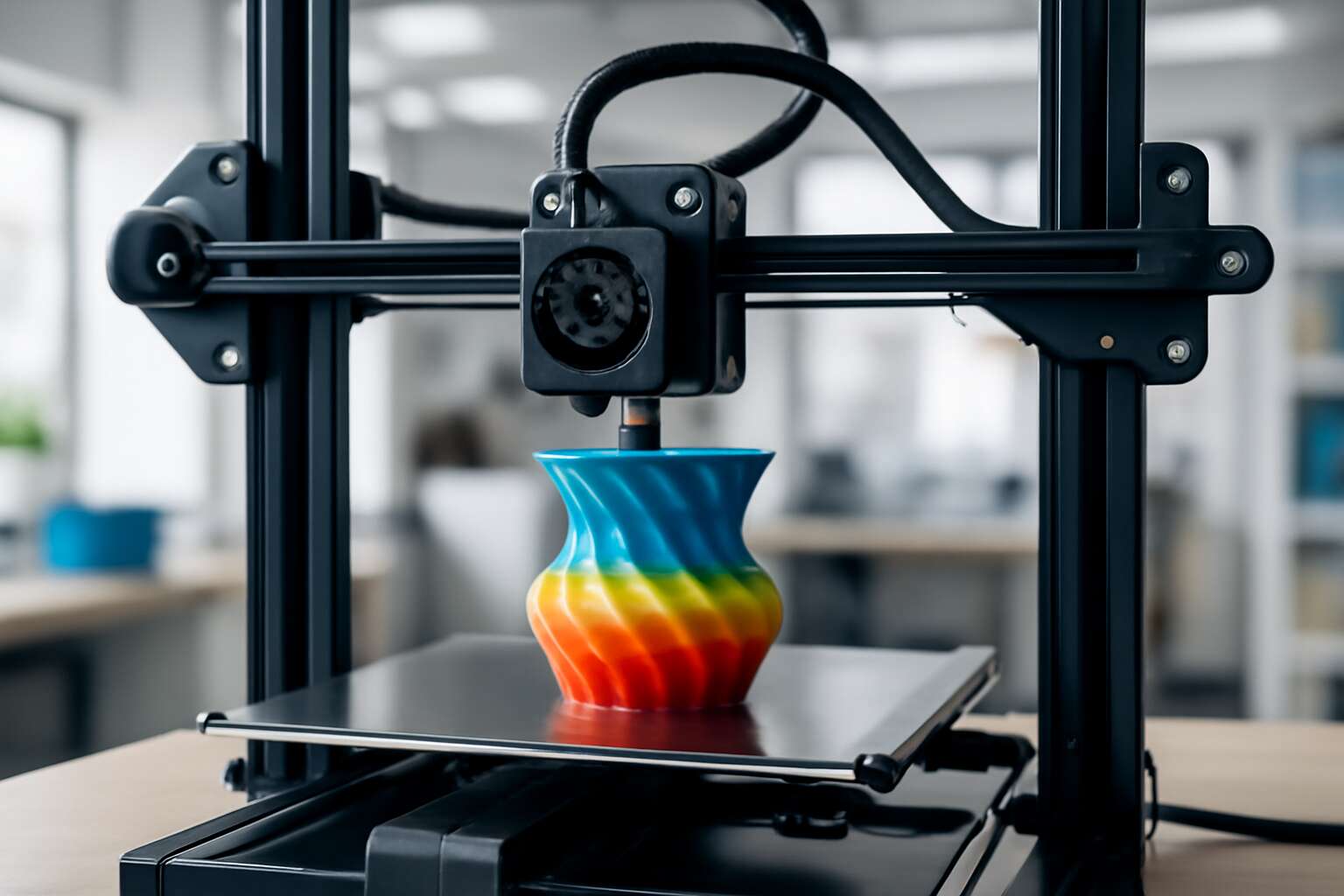
Understanding the Evolution of 3D Printing Technology
Historical Development of 3D Printing
Since its inception, 3D printing technology has undergone a remarkable transformation, shaping industries and redefining manufacturing possibilities. The journey from simple prototypes to sophisticated, fast 3D printing machines has been nothing short of revolutionary. Early methods, such as stereolithography and fused deposition modeling, laid the foundation for what would become a rapidly evolving field.
Today, the focus is on increasing speed without compromising precision. The evolution has seen the rise of innovative techniques like continuous liquid interface production (CLIP) and multi-material printing, which enable the creation of complex designs at unprecedented speeds. This shift has led to the development of fast 3D printing machines capable of reducing production times from days to mere hours, a game-changer for industries from aerospace to healthcare.
- The quest for speed has driven technological breakthroughs, pushing the boundaries of what 3D printing can achieve.
- Enhanced hardware and smarter software algorithms have combined to make faster, more reliable printing processes.
Understanding this historical development reveals a fascinating narrative of innovation, where each leap forward sets the stage for the next breakthrough in fast 3D printing machine technology, fueling the ongoing revolution in manufacturing and design.
Advancements in Printing Speeds
The rapid evolution of 3D printing technology has transformed the manufacturing landscape—what once took days can now be accomplished in mere hours. At the heart of this revolution lies the development of the fast 3D printing machine, pushing the boundaries of what’s possible in industry and innovation. It’s no exaggeration to say that speed is now a key driver of progress, fueled by breakthroughs in hardware design and smarter software algorithms.
Understanding the advancements in printing speeds reveals a pattern of relentless pursuit for efficiency. Today’s cutting-edge fast 3D printing machines employ novel techniques such as continuous liquid interface production (CLIP) and multi-material printing, allowing for complex designs to be realized with unprecedented speed. These innovations not only shorten production cycles but also open new horizons for industries like aerospace and healthcare, where time literally equals money.
- Enhanced hardware components
- Refined software algorithms
- Innovative printing techniques such as CLIP and multi-material processes
Such progress exemplifies how technological ingenuity and a keen eye for speed can coexist harmoniously in the realm of 3D printing. The ongoing evolution of fast 3D printing machines promises a future where rapid prototyping and mass customization are not just ambitions, but everyday realities—making the world of manufacturing as dynamic as the industries it serves.
Impact on Industry and Manufacturing
The evolution of 3D printing technology has profoundly impacted the manufacturing landscape across South Africa, transforming ideas into tangible realities at an astonishing pace. Once a niche innovation, today’s fast 3D printing machine is revolutionizing industries by dramatically reducing production times and increasing versatility. This progression isn’t just about speed; it’s about unlocking new levels of creativity and efficiency that were once thought impossible.
Over the years, advancements in hardware and software have played a pivotal role in shaping this rapid transformation. Cutting-edge hardware components, combined with smarter algorithms, enable a fast 3D printing machine to operate with remarkable precision and speed. Industries such as aerospace and healthcare now benefit from the ability to produce complex prototypes swiftly, making innovation more accessible and cost-effective than ever before.
- Improved hardware design that enhances durability and speed
- Innovative techniques like continuous liquid interface production (CLIP)
- Multi-material printing capabilities for intricate, multi-layered designs
Key Features of a Fast 3D Printing Machine
High Print Speed Capabilities
Imagine transforming ideas into tangible realities in a fraction of the time it once took—this is the promise of a fast 3D printing machine. With advancements driven by relentless innovation, these machines now boast capabilities that challenge traditional manufacturing timelines, allowing for rapid prototyping and swift production cycles. The core of this technology lies in its high print speed capabilities, which dramatically reduce wait times without sacrificing precision or detail.
At the heart of a fast 3D printing machine lies an intricate synergy between cutting-edge hardware and intelligent software algorithms. This combination ensures that layers are deposited seamlessly and efficiently, enabling complex geometries to be realized with remarkable speed. For industries in South Africa seeking to stay competitive, leveraging these high-performance machines can be transformative, unlocking new levels of productivity and creativity.
Precision and Accuracy
When it comes to a fast 3D printing machine, precision and accuracy are not just buzzwords—they are the foundation of reliable, high-quality outputs. These machines employ advanced hardware components, such as high-resolution nozzles and stabilized motion systems, to ensure every layer is deposited flawlessly. The result? Intricate designs with crisp details that meet even the most exacting specifications.
Beyond hardware, cutting-edge software algorithms play a pivotal role in maintaining consistency across complex geometries. They optimize print paths and temperature controls in real-time, minimizing errors and enhancing overall accuracy. For industries in South Africa seeking to push boundaries, this precision unlocks opportunities for innovative prototypes and durable end-use parts—delivering rapid results without compromise.
- High-resolution nozzles for fine detail
- Stabilized motion systems for seamless layer deposition
- Advanced software for real-time adjustments
In essence, the core strength of a fast 3D printing machine lies in its ability to marry speed with unwavering precision, transforming the landscape of manufacturing and design. This synergy creates a new dimension of productivity—where time is compressed without sacrificing quality, and every project becomes an opportunity for excellence.
Material Compatibility
In the shadowy realm of rapid innovation, a fast 3D printing machine emerges as an instrument of both precision and versatility. Its ability to handle diverse materials transforms the possibilities for industries across South Africa, from intricate prototypes to robust end-use components. Material compatibility is not a mere feature but a vital cornerstone, allowing the machine to adapt seamlessly to a spectrum of filaments and resins.
Some of the most sought-after materials include:
- ABS for durable, heat-resistant parts
- PLA for eco-friendly, detailed models
- Flexible filaments for elastic prototypes
- Specialized composites for high-strength applications
This versatility ensures that a fast 3D printing machine can cater to the unique demands of South African manufacturers and designers alike, turning visions into tangible realities with unparalleled speed and fidelity. The ability to work across such a broad material palette is what truly elevates a fast 3D printing machine beyond the ordinary—an essential for those who refuse to be confined by conventional boundaries.
User-Friendly Interface
Imagine a machine that not only transforms ideas into reality with breathtaking speed but also offers a seamless, intuitive experience—welcome to the world of the fast 3D printing machine. Its user-friendly interface acts as a bridge between imagination and creation, making complex designs accessible to both seasoned engineers and budding innovators across South Africa. With a touch of elegance, its control panel streamlines the entire process, allowing users to set parameters, monitor progress, and troubleshoot with ease.
What truly sets a fast 3D printing machine apart is its intuitive design, often featuring a touchscreen display that guides users through every step. This simplicity doesn’t compromise power; rather, it enhances productivity by reducing setup time and minimizing errors. For companies eager to accelerate their development cycles, such a machine is a game-changer, enabling rapid prototyping and swift iteration without sacrificing precision or quality.
- Simple navigation through settings
- Real-time status updates
- Automated calibration features
- Accessible firmware upgrades
In the fast-paced landscape of modern manufacturing, the best fast 3D printing machine combines technical prowess with effortless usability, empowering South African businesses to push boundaries and unlock new realms of creativity. Its intelligent interface turns complexity into clarity, making innovation not just possible but also delightfully straightforward.
Types of 3D Printing Technologies for Fast Production
FDM/FFF Technology
When it comes to turbocharging your production line, understanding the different types of 3D printing technologies is crucial. Among these, FDM (Fused Deposition Modeling), also known as FFF (Fused Filament Fabrication), reigns supreme in the realm of fast 3D printing machines. Why? Because it’s the workhorse of rapid prototyping and manufacturing, combining affordability with impressive speed. FDM/FFF technology works by extruding thermoplastic filament layer by layer—kind of like squeezing toothpaste onto a canvas, but with way more precision and less mess.
For those pushing boundaries in industrial applications, here are some highlights of FDM/FFF technology’s prowess:
- Material versatility—think ABS, PLA, or even exotic composites—allowing customization for different projects
- Ease of use—perfect for both seasoned engineers and newcomers eager to get their hands dirty
- Scalability—capable of handling small prototypes or large-scale production runs without breaking a sweat
In essence, if you’re hunting for a fast 3D printing machine that balances speed, flexibility, and cost-efficiency, FDM/FFF technology is undeniably a top contender. It’s the backbone of many innovative startups and manufacturing giants alike, proving that sometimes, tradition and speed go hand in hand in the world of 3D printing.
SLA/DLP for Rapid Prototyping
When it comes to rapid prototyping, the right technology can make or break your project timeline. SLA (Stereolithography) and DLP (Digital Light Processing) are two standout contenders in the world of fast 3d printing machine options, especially for those demanding precision and speed. Unlike traditional methods, these technologies use light to cure liquid resin layer by layer, resulting in astonishingly detailed models in record time. The rapid layer curing process ensures you get high-resolution prototypes faster than ever, propelling your workflow into overdrive.
What makes SLA/DLP particularly compelling is their ability to produce complex geometries with smooth surfaces, often surpassing FDM/FFF in finesse. This makes them ideal for industries that require intricate prototypes—think dental, jewelry, or detailed engineering parts. Plus, the material compatibility is expanding, with resins now crafted for flexibility, durability, and even biocompatibility.
- High speed—cutting lead times dramatically
- Exceptional detail and surface finish
- Wide range of resin materials for diverse applications
For businesses in South Africa seeking a fast 3d printing machine that combines speed with precision, SLA and DLP technologies are game-changers. They turn the once slow process of detailed prototype creation into an accelerated, almost supernatural experience—making your product development process not just faster, but smarter.
SLS and Multi-Jet Printing
While SLS (Selective Laser Sintering) and Multi-Jet Printing stand as formidable contenders in the realm of fast 3d printing machines, they each carve their unique niche in the landscape of rapid production. SLS, with its powder bed fusion technology, employs a high-powered laser to selectively fuse powdered materials—usually nylon, metals, or composites—layer by layer. This process is renowned for its ability to produce complex geometries without the need for support structures, drastically reducing post-processing time. Its speed and strength make it a preferred choice for functional prototypes and end-use parts in industries such as aerospace and automotive manufacturing.
Conversely, Multi-Jet Printing operates through a multi-nozzle array that deposits tiny droplets of photopolymer resin, which are then immediately cured by UV light. This method excels in delivering exceptional surface finish and intricate detail at remarkable speeds. An advantage of Multi-Jet Printing is its capacity to produce multi-material and multi-color components in a single build, opening new horizons for design complexity and functional versatility—particularly appealing for industries like healthcare and custom manufacturing.
For those seeking a fast 3d printing machine that balances speed with material versatility, these technologies provide compelling solutions. The choice hinges on the specific application—whether the priority is strength and durability or finesse and aesthetic appeal. Both SLS and Multi-Jet Printing exemplify the evolution of rapid prototyping, pushing the boundaries of what is achievable in record time.
Top Brands and Models of Fast 3D Printing Machines
Leading Manufacturers
Within the bustling realm of additive manufacturing, certain brands have emerged as paragons of innovation, propelling the capabilities of fast 3D printing machines into new frontiers. These manufacturers are not merely producing equipment; they are shaping the very fabric of modern industry, where speed and precision are paramount. Leading the charge are companies like Stratasys, Ultimaker, and Formlabs, whose models set industry benchmarks for rapid prototyping and high-volume production.
For instance, the Stratasys F900 exemplifies relentless efficiency, delivering unparalleled speed without sacrificing accuracy. Meanwhile, Ultimaker’s S5 Pro Bundle combines user-friendliness with impressive print speeds—an ideal choice for both startups and established enterprises. Formlabs’ Fuse 1 SLS 3D printer offers a compelling blend of speed and versatility, making it a favorite among those seeking a fast 3D printing machine that can handle complex geometries with ease.
- Stratasys F900—industry heavyweight with unmatched speed and reliability.
- Ultimaker S5 Pro Bundle—balanced performance, ease of use, and rapid output.
- Formlabs Fuse 1—industrial-grade speed with flexible material options.
These brands exemplify how leading manufacturers are pushing the envelope, ensuring that rapid 3D printing remains not just a possibility but a standard for innovative industries across South Africa and beyond. The evolution of these fast 3D printing machines signifies a seismic shift—where speed unlocks new realms of creativity and productivity.
Popular Models and Their Features
In a landscape where innovation accelerates at breakneck speed, having access to a top-tier fast 3D printing machine can redefine the boundaries of production and prototyping. The most popular models today are not just about rapid output—they combine speed with precision, material versatility, and user-friendly interfaces. These machines are transforming industries in South Africa and beyond, enabling creators and manufacturers to bring concepts to life in record time.
Leading brands like Stratasys, Ultimaker, and Formlabs have set the benchmark with models that stand out for their exceptional performance. For instance, the Stratasys F900 is renowned for its industrial-grade speed, perfect for high-volume manufacturing. Meanwhile, the Ultimaker S5 Pro Bundle strikes a balance between speed, usability, and reliability—ideal for startups aiming to scale quickly. The Formlabs Fuse 1 offers rapid SLS printing capabilities, handling complex geometries with remarkable efficiency.
- Stratasys F900 — unmatched in speed and reliability for demanding industrial applications.
- Ultimaker S5 Pro Bundle — combines rapid output with ease of use, making it a favorite among professionals.
- Formlabs Fuse 1 — delivers industrial-grade speed with flexible material options for intricate prototypes.
These models exemplify how a fast 3D printing machine can catalyze innovation, allowing industries across South Africa to stay competitive in a fast-evolving global market. Whether for rapid prototyping or large-scale production, these machines are powerful tools that push the limits of what’s possible in additive manufacturing today.
Performance Benchmarks
Among the pantheon of technological marvels, the top brands and models of fast 3D printing machines stand as testaments to human ingenuity and relentless pursuit of speed. These machines are not mere tools; they are catalysts that challenge our perception of possibility. In South Africa’s burgeoning manufacturing landscape, selecting a high-performance fast 3D printing machine can mean the difference between stagnation and innovation.
Leading brands like Stratasys, Ultimaker, and Formlabs have carved distinct niches with their flagship models. For instance, the Stratasys F900 exemplifies industrial-grade speed and robustness, capable of producing complex, large-scale prototypes with unmatched reliability. Meanwhile, the Ultimaker S5 Pro Bundle offers a harmonious blend of rapid output and intuitive operation, making it ideal for startups eager to scale quickly. The Formlabs Fuse 1 pushes the boundaries of rapid SLS printing, seamlessly handling intricate geometries with impressive efficiency.
- Stratasys F900 — a powerhouse for demanding industrial applications
- Ultimaker S5 Pro Bundle — a versatile choice for fast, reliable prototyping
- Formlabs Fuse 1 — delivering industrial speed with material versatility
Performance benchmarks reveal that these models are not just about speed—they embody the essence of precision, reliability, and material flexibility. As industries in South Africa increasingly turn to these advanced fast 3D printing machines, the boundary between conceptualization and realization dissolves. The question isn’t whether these machines can keep pace, but how quickly they can transform ideas into tangible realities—an existential leap toward innovation in additive manufacturing.
Materials Suitable for Fast 3D Printing
Thermoplastics
When exploring the realm of materials suitable for fast 3D printing, thermoplastics emerge as the most versatile and widely used. Their ability to withstand rapid heating and cooling cycles makes them ideal for a fast 3D printing machine, ensuring high throughput without sacrificing quality. These materials are essential for creating prototypes, functional parts, or intricate designs with efficiency and precision. The choice of thermoplastics influences not only the durability of the final product but also the speed at which it can be produced.
Among the most popular options are ABS, PLA, PETG, and nylon. Each offers unique properties that cater to different needs. For instance, ABS provides high impact resistance, while PLA is known for its eco-friendliness and ease of use. PETG strikes a balance with clarity and strength, making it suitable for detailed, rapid prototyping. Nylon, on the other hand, offers flexibility and toughness, which are essential for parts subjected to stress.
In a fast 3D printing machine setup, selecting the right material is crucial to maximize speed without compromising on detail or functional integrity. When considering materials for rapid production, it’s wise to evaluate their melting points, layer adhesion qualities, and post-processing requirements. These factors determine whether a thermoplastic will perform optimally in a high-speed environment, ultimately pushing the boundaries of what’s possible in additive manufacturing.
Resins
When it comes to materials suitable for fast 3D printing resins, the key lies in speed without sacrificing finesse. These resins are engineered to cure rapidly, enabling high throughput in a fast 3D printing machine while maintaining intricate detail. Unlike traditional options, fast-curing resins often feature innovative formulations that reduce layer times, making them perfect for rapid prototyping and quick-turnaround projects.
In the realm of ultra-fast 3D printing, the right resin choice can turn a sluggish process into a streamlined production line. For example, light-sensitive resins with optimized photopolymerization properties are game-changers in this space. They allow for quick layer curing, ensuring that each build is both swift and precise. To navigate this landscape, consider these critical factors:
- Cure speed
- Layer adhesion quality
- Post-processing complexity
By evaluating these parameters, operators can select the ideal resin for their fast 3D printing machine, unlocking new heights of efficiency and creativity in additive manufacturing. Whether producing intricate prototypes or durable functional parts, the choice of materials is pivotal in achieving optimal performance in a high-speed 3D printing environment.
Metal Filaments
When it comes to fast 3D printing machines, choosing the right metal filament can significantly boost productivity. Metal filaments designed for rapid additive manufacturing are engineered for quick melting and solidification, enabling high-speed builds without compromising strength. These materials often contain fine metal powders blended with polymer binders, providing excellent flow properties for fast printing speeds.
Some popular options include stainless steel, bronze, and aluminum filaments, each offering unique properties suited for industrial applications. To maximize efficiency, look for metal filaments with optimized particle sizes and binder formulations that promote faster layer adhesion and reduce print times.
- High thermal conductivity
- Superior layer bonding
- Minimal post-processing
These factors are crucial for leveraging the full potential of a fast 3D printing machine in metal additive manufacturing.
Benefits of Using a Fast 3D Printing Machine
Reduced Production Time
Imagine transforming complex designs into tangible prototypes in a fraction of the time it once took—this is the magic a fast 3D printing machine brings to industries across South Africa. By significantly reducing production time, these innovative devices accelerate workflows and enable rapid iteration, giving businesses a competitive edge in a fast-paced market. The ability to produce high-quality parts swiftly means that engineers and designers can focus on refining their ideas rather than waiting days or weeks for results.
One of the most compelling benefits of using a fast 3D printing machine is the dramatic boost in productivity. Instead of lengthy build cycles, these machines deliver rapid turnaround times, which is essential for industries like aerospace, automotive, and healthcare. The efficiency gained not only shortens project timelines but also reduces operational costs, making high-speed 3D printing an invaluable asset for forward-thinking companies. With ongoing advancements, the future of rapid prototyping and manufacturing looks brighter than ever—fueled by the unmatched speed of these cutting-edge machines.
Cost Efficiency
Harnessing the power of a fast 3D printing machine translates directly into remarkable cost efficiencies for businesses across South Africa. In a landscape where time is money, the ability to produce high-quality prototypes and parts in a fraction of the traditional time dramatically reduces operational expenses. Companies find themselves able to allocate resources more effectively, minimizing wastage and lowering material costs through rapid, precise manufacturing. This agility not only boosts profit margins but also enhances the ability to respond swiftly to market demands.
Furthermore, the accelerated production cycle means fewer labor hours are needed to oversee each project, leading to significant savings in manpower. For industries like automotive and healthcare, where precision and speed are paramount, the integration of a fast 3D printing machine becomes a game-changer. It empowers teams to shift their focus from prolonged manufacturing processes to innovative design and development, fostering a cycle of continuous improvement.
In essence, the cost benefits of adopting a fast 3D printing machine extend beyond mere savings—they unlock new levels of productivity and market competitiveness. The ability to iterate rapidly, cut down on resource wastage, and speed up project timelines makes these machines an indispensable asset for forward-looking South African enterprises eager to stay ahead in a dynamic global economy.
Enhanced Prototyping Speed
In the fast-paced world of manufacturing, a fast 3D printing machine isn’t just a luxury—it’s a necessity for South African companies eager to stay ahead of the curve. Imagine transforming a concept into a tangible prototype in a fraction of the time it once took. That’s the power of enhanced prototyping speed, which allows businesses to iterate rapidly, cut down development cycles, and respond swiftly to market demands. The days of waiting weeks for prototypes are gone; now, it’s all about seconds, thanks to these technological marvels.
By leveraging a fast 3D printing machine, industries such as automotive, healthcare, and aerospace can experience a revolutionary boost in productivity. The ability to produce high-fidelity prototypes faster means more time for innovation and fewer resources wasted on lengthy manufacturing processes. With quicker turnaround times, companies can test, refine, and perfect their designs more efficiently, giving them a competitive edge in South Africa’s vibrant economy.
Increased Productivity
In the relentless rhythm of modern innovation, a fast 3D printing machine emerges as the heartbeat of progress. It transforms the industrial landscape into a symphony of speed and precision, where ideas leap from concept to creation with exhilarating velocity. The true magic lies in the ability to amplify productivity—each minute saving becomes a victory in the race against time. With these marvels, South African industries can push boundaries, turning visions into tangible realities at a pace once thought impossible.
By harnessing the power of a fast 3D printing machine, companies unlock a realm of efficiency that redefines manufacturing norms. Rapid turnaround times mean more iterations, more experimentation, and ultimately, more innovation. The ability to produce high-quality prototypes swiftly fosters a culture of continuous improvement. For sectors like automotive, healthcare, and aerospace, this accelerated process becomes their secret weapon—streamlining workflows and reducing costs while elevating the quality of final products.
Imagine a list of benefits that flow seamlessly into this narrative:
- Reduced lead times that accelerate project timelines
- Enhanced capacity for rapid prototyping and testing
- Better resource allocation through minimized waste
- Increased agility to adapt to market trends and demands
Each benefit underscores the transformative potential of integrating a fast 3D printing machine into South African manufacturing ecosystems. It’s not just about faster production; it’s about redefining what’s possible within a constrained timeframe, empowering businesses to innovate relentlessly and stay ahead in a fiercely competitive landscape.
Challenges and Limitations of Fast 3D Printing Machines
Quality Versus Speed Trade-offs
Despite the remarkable advancements in fast 3D printing machines, a persistent challenge remains: balancing speed with quality. While increasing the print speed can dramatically reduce production times, it often comes at the expense of precision and surface finish. Manufacturers are continually pushing the limits of what’s possible with a fast 3D printing machine, but this relentless pursuit can lead to compromises in layer resolution and detail accuracy. The trade-off between quality and speed isn’t just a technical hurdle; it impacts the integrity and aesthetic appeal of the final product.
To navigate these limitations, some innovative solutions include adjustable print settings and hybrid technologies that optimize both speed and detail. For example, certain models incorporate multi-material capabilities or advanced cooling systems to mitigate issues caused by rapid layer deposition. Ultimately, selecting the right fast 3D printing machine depends on the specific application—whether rapid prototyping or high-fidelity manufacturing. Striking this balance is essential for maximizing efficiency without sacrificing the quality that clients and industries demand.
Material Constraints
While fast 3D printing machines promise to revolutionize production timelines, they are not without their Achilles’ heel—material constraints. The pursuit of blistering speeds often forces manufacturers into a corner where material choice becomes a limiting factor. Not all filaments or resins can keep pace with the rapid layer deposition, and some simply refuse to behave when pushed to the limits of speed. This is especially true for advanced thermoplastics and high-performance resins, which demand meticulous handling and precise temperature control to avoid warping or weak spots.
Furthermore, a fast 3D printing machine’s ability to work with a broad spectrum of materials remains a challenge. Manufacturers are constantly expanding compatibility, but the current landscape is still a game of compromises. For example, metal filaments or specialized composites may require slower, more controlled printing conditions to ensure integrity. Here’s a quick rundown of materials typically constrained by high-speed printing:
- Thermoplastics like ABS and PETG, which can crack under rapid cooling
- Resins that cure too quickly, leading to surface imperfections
- Metal filaments needing precise temperature regulation to avoid defects
In essence, the material constraints for a fast 3D printing machine are a reminder that not every project benefits from the speed of light. Balancing rapid output with material compatibility is an ongoing challenge that keeps even the most advanced machines on their toes—and sometimes, in the slow lane.
Initial Investment Cost
Investing in a fast 3D printing machine can be a significant financial commitment. These advanced machines often come with a hefty initial cost, making them a substantial capital expenditure for many businesses. The high-speed capabilities and cutting-edge technology drive up the price, especially for models with enhanced precision and broader material compatibility.
For companies considering this investment, it’s essential to weigh the benefits against the financial outlay. A fast 3D printing machine can drastically reduce production timelines, but the premium price tag means careful planning is required. In some cases, the cost of maintenance and upgrades can also add up quickly, impacting overall return on investment.
Furthermore, acquiring a fast 3D printing machine may necessitate additional infrastructure, such as specialized workspace or climate control. This can increase setup costs and extend the timeline before realizing productivity gains. Despite the high upfront investment, many see it as a strategic move—accelerating prototyping and manufacturing while staying ahead in competitive markets.
Maintenance and Technical Support
While the velocity of a fast 3D printing machine is undeniably impressive, maintaining these advanced systems presents unique challenges. Technical support becomes crucial to prevent costly downtimes, especially when precision and speed are paramount. The intricate hardware and sophisticated software require regular updates and expert troubleshooting—something not always straightforward in rapidly evolving technology landscapes.
Moreover, maintenance costs can escalate quickly, often overshadowing initial savings. Components such as high-performance motors, precision nozzles, and cooling systems demand specialized care. For many businesses, this means investing in skilled technicians or comprehensive service contracts, which can strain budgets.
It’s also worth noting that some fast 3D printing machine models have limited compatibility with certain materials, leading to increased wear and tear. This can add complexity to upkeep, as users must often adapt or upgrade parts to sustain optimal performance. The trade-off between speed and reliability remains a persistent challenge in harnessing the true potential of these cutting-edge devices.
How to Choose the Right Fast 3D Printer for Your Business
Assessing Your Production Needs
Choosing the right fast 3D printing machine is akin to selecting a mythical steed for an epic quest—each offers unique powers tailored to specific challenges. In the bustling realm of South African manufacturing and prototyping, understanding your production needs is paramount. Do you require rapid turnaround for intricate prototypes, or is your focus on high-volume component fabrication? Clarity here guides you toward a machine that harmonizes speed with precision, without sacrificing quality.
To navigate this enchanted landscape, consider key factors such as build volume, material compatibility, and operational complexity. For instance, a fast 3D printing machine capable of handling a diverse range of materials—thermoplastics, resins, or even metals—can dramatically reduce production time while increasing productivity. Sometimes, a straightforward approach resonates best, making a user-friendly interface and reliable technical support essential companions on your journey.
In the quest for efficiency, ask yourself:
- What is the maximum volume I need to produce regularly?
- How critical is the balance between speed and accuracy?
- Will my chosen machine integrate seamlessly into existing workflows?
By aligning these considerations with the machine’s capabilities, you unlock the potential to harness a fast 3D printing machine that elevates your business into a new realm of innovation and efficiency.
Budget Considerations
In the shadowed corridors of innovation, selecting a fast 3D printing machine that aligns with your business budget is a decision that echoes through the halls of progress. The allure of rapid prototyping and accelerated production can tempt even the most cautious, but understanding the true cost is vital. A top-tier fast 3D printing machine might promise speed and precision, yet its initial investment and ongoing maintenance can cast long, foreboding shadows on your finances.
To navigate this labyrinth, consider the total cost of ownership—investment, operational expenses, and support services. Sometimes, a modest machine with a reputation for reliability and low upkeep outweighs the allure of the most expensive model.
- Assess your budget realistically, factoring in future scaling needs.
- Prioritize machines with proven durability and support infrastructure.
- Balance the allure of high speeds against the constraints of your material choices and workflow demands.
Choosing wisely ensures your fast 3D printing machine becomes a steadfast ally, not a costly ghost haunting your production line.
Compatibility with Materials
Choosing the right fast 3D printing machine for your business hinges on understanding material compatibility. Not all printers are created equal, and selecting a model that supports your desired materials can make or break your production efficiency. Whether you’re working with thermoplastics, resins, or metal filaments, ensuring your machine can handle these materials without compromising speed or quality is essential.
To navigate this, consider the specific requirements of your projects. For instance, if rapid prototyping with high-detail resin prints is your goal, then SLA or DLP-based models might be the best fit. Conversely, for durable, functional parts in thermoplastics, an FDM/FFF technology-based fast 3D printing machine offers robustness and versatility. Remember, material constraints—like temperature ranges and compatibility—are crucial factors that influence your final decision.
- Identify the primary materials your business uses or plans to incorporate.
- Check the printer’s material support specifications thoroughly.
- Ensure the machine’s compatibility aligns with your workflow demands and projected growth.
By meticulously evaluating material compatibility, you’ll ensure your fast 3D printing machine becomes a reliable powerhouse—enhancing productivity without sacrificing the quality of your outputs. In the vibrant landscape of South Africa’s manufacturing and innovation sectors, selecting a machine that harmonizes with your material needs is a vital step toward sustained success and technological edge.
Support and Maintenance Services
Choosing the perfect fast 3D printing machine for your business isn’t just a matter of picking the latest shiny model. It’s about ensuring seamless support and maintenance services that keep your operation humming like a well-oiled machine. Think of your 3D printer as the heartbeat of your production line—neglect it, and everything grinds to a halt faster than you can say “layer error.”
Start by evaluating the manufacturer’s support reputation—do they offer prompt troubleshooting, spare parts, and regular firmware updates? A reliable fast 3D printing machine should come with comprehensive maintenance services that minimize downtime and maximize productivity. For businesses in South Africa aiming to stay ahead in innovation, partnering with a supplier that provides dedicated technical support is non-negotiable. This way, you turn your investment into a long-term asset, not a high-tech paperweight.
Future Trends in Fast 3D Printing Technology
Innovations in Speed and Efficiency
As the horizon of 3D printing technology expands, the future promises a symphony of speed and efficiency that transforms industries at a breathtaking pace. Innovations are emerging that push the boundaries of what a fast 3D printing machine can achieve, turning moments into minutes and prototypes into production-ready components with unprecedented rapidity. Imagine a world where the time from concept to creation shrinks dramatically, enabling manufacturers in South Africa to meet demands with agility and finesse.
Advancements are not solely about raw speed; they intertwine with enhanced precision, ensuring each layer of material is deposited with exquisite accuracy. To harness these innovations, manufacturers are increasingly adopting fast 3D printing machines equipped with advanced algorithms that optimize print paths and reduce downtime. These machines are now capable of integrating multiple materials seamlessly, broadening the scope of applications—from high-strength thermoplastics to intricate resin-based prototypes.
- Enhanced print head designs that increase deposition rates without sacrificing quality.
- Adaptive cooling systems that expedite solidification, trimming hours off production cycles.
- Smart automation and AI-driven adjustments that maintain peak performance during intense printing sessions.
In this rapidly evolving landscape, staying ahead means embracing these cutting-edge trends—where speed, efficiency, and innovation converge in a harmonious dance—making the fast 3D printing machine not just a tool but a catalyst for industrial revolution in the digital age.
Integration with Industry 4.0
In the shadowed corridors of technological evolution, the integration of fast 3D printing machines with Industry 4.0 signals a new dawn—one where digital precision and rapid fabrication dance in eerie harmony. As factories in South Africa embrace this paradigm shift, the boundaries between concept and creation blur into a spectral mist, driven by the relentless march of automation and smart technology.
Future trends reveal a landscape where fast 3D printing machines are no longer isolated tools but interconnected nodes within a vast, intelligent network. These machines are empowered by advanced algorithms that optimize print paths, dramatically reducing production times while maintaining impeccable quality. Enhanced print head designs and adaptive cooling systems work in tandem, expediting solidification without sacrificing precision.
- Integration of AI-driven adjustments ensures peak performance during intense print sessions.
- Seamless multi-material deposition unlocks complex applications, from high-strength thermoplastics to delicate resins.
- Real-time data analytics facilitate predictive maintenance, minimizing downtime and increasing productivity.
As the digital and physical worlds converge, the future of fast 3D printing machines within the Industry 4.0 framework promises a transformative era—where innovation is no longer a fleeting moment but an enduring force that reshapes manufacturing in South Africa and beyond.
Emerging Materials and Techniques
Future trends in fast 3D printing machines are reshaping manufacturing landscapes across South Africa. Emerging materials like bio-resins, high-performance composites, and metal filaments are expanding the horizon for rapid prototyping and production. These new materials not only offer increased durability and temperature resistance but also open doors to industries previously limited by material constraints.
Innovative techniques such as multi-material deposition and hybrid manufacturing are gaining momentum. They allow for complex geometries and functional parts to be produced in a single run, significantly reducing time and costs. The integration of AI-driven adjustments enhances the capabilities of fast 3D printing machines, ensuring optimal performance during high-speed operations. This technology enables real-time adjustments for precision, even in challenging print jobs.
Furthermore, the development of adaptive cooling systems and advanced print head designs accelerates solidification, pushing the boundaries of what a fast 3D printing machine can achieve. These advancements promise not just faster production but also higher quality outputs. As these innovations become more accessible, South African manufacturers stand to benefit from a new era of efficient, intelligent, and versatile rapid manufacturing solutions.
Sustainability and Eco-friendly Solutions
As sustainability takes center stage in modern manufacturing, the future of fast 3D printing machines in South Africa is weaving a tapestry of eco-friendly solutions and innovative materials. Enthusiasts and industry leaders alike are seeking ways to minimize environmental impact without sacrificing speed or quality. Emerging trends point toward the integration of biodegradable bio-resins, recycled thermoplastics, and metal filaments derived from sustainable sources. These advancements are transforming the landscape, making rapid prototyping and production not only faster but also greener.
One of the most promising developments is the deployment of eco-conscious materials that reduce waste and energy consumption during the printing process. For example, the adoption of recycled filament options enables manufacturers to produce high-performance parts while supporting local recycling initiatives. Additionally, improvements in print head design and cooling systems are enhancing the efficiency of fast 3D printing machines, leading to more sustainable operations overall.
In the quest for greener manufacturing, some innovative solutions include:
- Utilizing renewable energy sources to power high-speed 3D printers
- Developing multi-material systems that optimize resource use
- Implementing closed-loop recycling within the production cycle
With these transformative trends, South African industries are poised to embrace a new era of rapid, responsible manufacturing. The fusion of speed, precision, and sustainability promises a future where innovation and environmental stewardship go hand in hand, all driven by the relentless evolution of the fast 3D printing machine. Truly, this is a time when the boundaries of possibility are being redefined, one layer at a time!


0 Comments