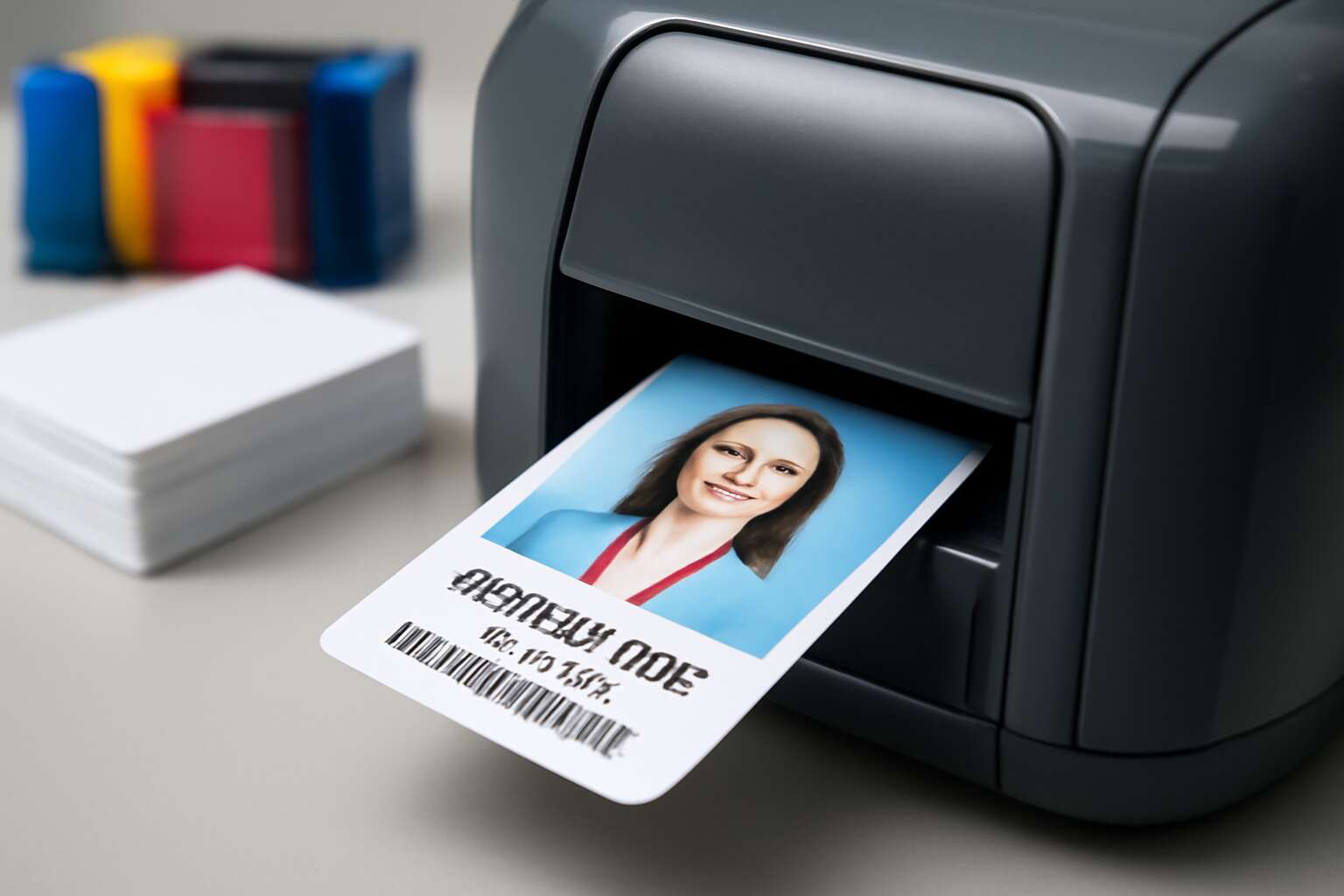
Overview of ID Card Printing Technology
What is an ID card printer?
In South Africa, an ID card isn’t merely a badge—it’s a compact guardian that travels from reception to restricted zones! I’ve watched how the technology behind these cards blends color fidelity with durable laminates, turning data into a durable identity in seconds.
So, what is an ID card printer? Put simply, it’s the device that applies images, text and security features onto a plastic card. Direct-to-card printers lay dye-sublimation color straight onto the card, while retransfer systems lift imagery to a film and reapply for edge-to-edge clarity.
- Direct-to-card (DTC) printing for quick IDs
- Retransfer printing for higher durability
- Embedded security features like UV inks and microtext
For organizations, choosing the right id card printing machine depends on volume, desired durability, and security. The right mix reduces wear on staff and misprints—an unseen expense saved, and a tiny badge becomes a dependable gatekeeper.
How ID card printers work
In South Africa, a badge is more than a credential—it’s a quiet guardian guiding people from reception to restricted zones with confidence. A compelling stat hints at the payoff: check-ins can accelerate by up to 40% when IDs emerge from a refined print process, crisp and secure.
An id card printing machine orchestrates two routes to color and clarity. Direct-to-card deposits dye straight onto the surface, while retransfer lifts the image to a film and reapplies it for edge-to-edge fidelity and rugged durability.
- Two principal pathways: direct color deposition and retransfer film
- Edge-to-edge coverage for durable, lifetime-friendly cards
- Security features evolving with UV inks and microtext
Volume and durability shape the choice, and in a market where each badge guards access, precision is priceless. The right machine blends speed with fidelity, turning data into identity in seconds and keeping the flow, the trust, and the doors open.
Common print technologies
In South Africa’s bustling lobbies, an id card printing machine does more than stamp names—it weaves trust into every check-in. With a refined process and crisp color, institutions report up to 30% faster throughput at receptions.
Two principal routes shape color and clarity: Direct-to-card deposition and retransfer printing. An id card printing machine blends these approaches to deliver fast production and edge-to-edge fidelity.
- Direct-to-card printing: dye is applied directly to the card surface for speed and simplicity
- Retransfer printing: image is printed onto a film and then transferred for uniform coverage and tougher cards
- Security options: UV inks, microtext, and overlay laminates provide layered protection
As volume and durability drive choices, the right system balances rapid issuance with lasting integrity, keeping flows smooth and doors secure across South Africa’s workplaces.
Color vs monochrome printing options
Across South Africa’s busy lobbies, color IDs can shave minutes off every check-in—some facilities report up to 25% faster throughput when color is part of the ID. The id card printing machine that blends speed with precision makes that difference tangible, turning verification into a quick, almost intuitive moment.
Color vs monochrome is a measured tension between impact and economy. Here are quick contrasts:
- Color printing boosts logo fidelity and quick readability at a glance!
- Monochrome keeps production lean, with fewer consumables and lower costs.
- Hybrid approaches offer edge-to-edge coverage while balancing speed and security.
In South Africa, choosing the right path means weighing volume, card durability, and security features—the same decision that shapes every id card printing machine in busy receptions and secure facilities.
Types of ID Card Printers
Desktop vs portable ID card printers
In the quiet corridors of command and control, a familiar truth whispers: 60% of ID cards are born on desktop rigs, not the battlefield of fieldwork. The id card printing machine stores the pulse of your security program, steady as a heartbeat, turning data into badges with a glow that never fades! For many organisations, desktop printers offer reliability, volume, and predictable performance in a fixed home base.
Two archetypes stalk the market, each with a distinct mood and mission.
- Desktop ID card printers—robust, high-volume workhorses suited to offices, campuses, and security desks.
- Portable ID card printers—compact, mobile, and ideal for on-site issuance at events or remote sites.
- Hybrid variants—space-conscious options that straddle the line between desk and field.
The choice is a balance of space, speed, and security, and the right option shapes how an organisation presents itself to the world.
Laminating vs non-laminating printers
In busy environments—think university campuses, airports, and election logistics—badge durability speaks louder than glossy color. A well-chosen id card printing machine keeps pace with wear, ensuring legibility long after the first handshake. “Durability is the passport to trust,” an SA security chief once reflected, and laminating often seals that trust.
Laminate vs non-laminate is more than shine. Laminating adds a protective layer against abrasion, moisture, and fading, making cards resilient in field conditions; non-laminating paths rely on quality card stock and coatings but wear sooner.
- Laminate advantages: edge-to-edge protection, extended lifespans, tamper-evident potential
- Non-laminate considerations: lower cost, faster turnaround, simpler maintenance
Ultimately, the choice shapes how organisations in South Africa present themselves—durable, dependable, and ready for the next shift in security.
Single-sided vs dual-sided printers
On South Africa’s bustling hubs, a badge is more than an ID—it is a shield, trusted by thousands every day. “Durability is the passport to trust,” an SA security chief once reflected. When deciding between single-sided and dual-sided printers, you buy longevity as much as speed.
Single-sided printers are compact, affordable, and quick for straightforward badges; dual-sided printers offer edge-to-edge coverage and higher durability, at a higher upfront cost.
- Single-sided: compact footprint, lower upfront cost, fastest output
- Dual-sided: full front-and-back printing, enhanced durability, longer card life
- Hybrid options: built-in flip modules for mid-range needs
For South African organisations, the choice shapes how they present themselves—durable, dependable, and ready for the next shift in security. The id card printing machine should mirror pace, withstand wear, and safeguard legibility in busy environments.
Optional printing features (rewritable, UV, edge-to-edge printing)
In South Africa’s bustling foyers, a badge is more than a name—it’s a shield, catching the light of first impressions. A SA security chief once whispered, “Durability is the passport to trust.” When selecting an id card printing machine, professionals weigh compact desktop units, mid-range hybrids, and rugged networked printers—each ticking the clock of reliability in a busy workplace.
Optional printing features tailor durability and security without disrupting flow. Consider these enhancements to elevate your print job:
- Rewritable surfaces for temporary IDs or frequent renewals
- UV printing to embed covert anti-counterfeit details
- Edge-to-edge printing for full-bleed branding and easier legibility
In the SA context, such features let teams balance speed with resilience, keeping credentials legible under pressure and ready for the next shift in security.
Key Features and Specifications
Print speed and throughput
Key Features and Specifications: Print speed and throughput drive the choice of an id card printing machine. In South Africa’s busy offices, every second counts and productivity hinges on quick results.
Print speed is measured in cards per hour (CPH). Color prints typically run around 150–300 CPH, while monochrome can be faster depending on model and ribbon. Throughput depends on encoding options, lamination, and batch size.
Real-world speed is best judged by tested performance and reliability data from the supplier.
- Ribbon capacity and color options influence rate and batch quality.
- Encoding and finishing steps add time but boost card durability.
The right printer balances speed with reliability to match daily demand across South Africa’s municipal offices, schools, and corporate campuses.
Card encoding options
Every encoded card speeds the line. In South Africa’s busy offices, the right encoding options can save minutes on hundreds of cards daily. For an id card printing machine, encoding choices shape security and durability. Some audits show encoding optimization can cut processing time by up to 35%.
- Magnetic stripe encoding for legacy access systems
- Contact smart card encoding (ICC) for chip-based credentials
- Contactless smart card encoding (RFID/NFC) for rapid, tap-and-go access
Ribbon capacity and finishing steps interact with encoding, influencing batch size and card longevity. The best setup blends speed with reliability, ensuring smooth operation across municipal offices, schools, and corporate campuses in South Africa. The right id card printing machine balances speed with reliability to meet daily demand.
Resolution and image quality
In South Africa’s bustling offices, a crisp 600 dpi image on each badge is more than prestige—it’s speed on the front line. The id card printing machine handles high-volume runs with dependable color fidelity and edge-to-edge readability, even on demanding batches.
- Adjustable dpi range (300–600) for speed or detail
- Pigment inks delivering durable, fade-resistant color
- Accurate color management with built-in ICC profiles
Reliability is built into every choice: sturdy card feeders, generous memory buffers, and seamless integration with existing access or login systems ensure a smooth, uninterrupted flow across schools, municipal sites, and corporate campuses.
Card material compatibility and durability
Across South Africa’s office fortresses, the id card printing machine stands as a quiet sentinel, turning identity into a portable key. A recent security survey found badge readability at 600 dpi speeds door checks by up to 28%, and I’ve witnessed that spark translate to seamless arrivals in bustling lobbies!
To keep pace with daily traffic, card material compatibility matters:
- PVC CR80 standard cards
- Composite PVC/PET cards
- PET-only cards
- 30–40 mil (0.76–1.02 mm) thickness tolerance
Durability is baked into the substrate and the print layer: vivid, fade-resistant color that withstands sunlight, oils, and daily handling remains legible for years. The system supports ISO/IEC 7810 ID-1 card standards, ensuring consistent sizing and edge-to-edge readability in busy environments.
Connectivity and software compatibility
In South Africa’s bustling corridors, an id card printing machine does more than print—it orchestrates trust. A recent security study found badge readability at 600 dpi speeds door checks by up to 28%, turning identity into a portable key with precision and grace.
Key features and specifications shine in connectivity and software compatibility. It offers versatile interfaces for quick setup, cross‑platform drivers, and secure print queues.
- USB-C/USB-A for fast setup
- Ethernet and optional Wi‑Fi for networks
- APIs for Windows, macOS, and Linux
Compact yet scalable, the unit integrates with existing ID workflows, supports role-based access and secure firmware updates, and remains legible through daily handling in busy lobbies.
Applications and Industry Use Cases
Education institutions and staff IDs
“Badges are the gatekeepers of campus safety,” notes a security director in a South African university. On busy campuses, an id card printing machine can issue ID cards on the spot, trimming queues and boosting accountability for staff, students, and visitors.
In education, these systems power a spectrum of applications that go beyond photo ID:
- Student IDs for identity verification and campus access
- Staff badges with departmental roles and timekeeping
- Visitor passes that track entries and exit times
With straightforward software and durable card stock compatibility, the technology blends into enrolment desks, libraries, and security checkpoints, turning routine ID issuance into a reliable, auditable process that supports learning environments across South Africa.
Corporate offices and access control
On the busy floors of a corporate campus, security is not a gate but a conversation. An id card printing machine sits at the crossroads of trust and hustle, turning a badge into a quiet guarantee that the right person is who they claim to be.
In these settings, the technology threads through daily protocols and risk management. The following use cases illustrate how organisations in South Africa keep pace with modern governance:
- Access control that gates doors and elevators for authorized staff
- Visitor management with signed-in accountability and emailable passes
- Timekeeping and role-based permissions linked to HR systems
With durable cards, crisp encoding, and seamless software, corporate offices gain an auditable trail without abrasive friction—an elegance that respects privacy while strengthening safety in the workplace.
Healthcare facilities and patient IDs
Across South Africa’s health networks, on-demand patient IDs inject clarity into crowded wards. A single id card printing machine can issue secure IDs in minutes, reducing misidentification by up to 30% and speeding triage when seconds matter!
These devices weave patient data with room assignments, allergies, and consent preferences, creating an auditable trail that respects privacy while guarding safety. This badge ties data to a physical identity, turning information into a verifiable doorway for clinicians and porters alike. I’ve seen it cut through chaos on busy days!
Key healthcare applications unfold quietly at the bedside:
- Bedside patient IDs
- Controlled access to wards
- Links to electronic records and schedules
Event and membership cards
At major South African events, streamlined badge issuance can cut entry queues by up to 30%. An id card printing machine makes on-site badges effortless, blending security with speed, and giving organizers a clear, auditable trail from registration to access control.
Use cases at events and memberships include:
- Attendee badges with photo and name, QR or barcode for quick scanning
- Staff, speaker, and VIP passes with role-based access
- Membership cards for clubs, associations, and loyalty programs
From lecture halls to sporting venues, these solutions deliver durable IDs that stand up to Africa’s climate while keeping data private. It anchors identity to access privileges in real time.
Government and public sector IDs
In South Africa’s public sector, millions of identity documents cross desks yearly, and swift badge issuance can trim queues by up to 25%. A trusted id card printing machine blends speed with security, delivering auditable trails from registration to access control.
Key applications in government and public service include:
- National identity and civil registration cards
- Voter registration and polling-station access badges
- Public service badges for frontline workers, inspectors, and enforcement officers
From municipal offices to national agencies, these devices endure Africa’s climate while safeguarding privacy and linking credentials to real-time privileges.
Buying Guide and Maintenance
Budget considerations and total cost of ownership
South African offices know downtime bites. This id card printing machine is not just office gear—it’s security infrastructure you can’t fake, and a lax maintenance plan costs more than the printer itself.
Buying guide basics: weigh upfront cost against ongoing consumables, service, and downtime. Look for local support, spare parts availability, and fair warranty terms.
- Consumables cost
- Maintenance plans
- Lead times for parts
- Software updates
Maintenance budget considerations aside, total cost of ownership hinges on more than the sticker price. Budget for cards, ribbons, energy and downtime—plus occasional firmware tweaks.
Keep the numbers honest and the nerves calm—smart budgeting keeps your team from choosing between coffee and credentials.
Brand comparisons and warranty
Every hour an id card printing machine sits idle is a budget moment you won’t recover. When selecting a brand, real-world reliability matters: local support, spare parts availability, and fair warranty terms for your id card printing machine. A SA security manager once quipped, “Downtime is a luxury we can’t afford”—and it’s still true today.
Maintenance and warranty details can swing a purchase from “meh” to “mission-critical.” Look at maintenance plans, on-site options, and firmware updates. For quick comparisons, consider these:
- Warranty scope
- Spare-parts lead times
- Service response SLAs
Setup and training requirements
Security desks hum with activity, and the id card printing machine sits at the heart of it all. When it stalls, every minute costs more than ink and resin; in South Africa, downtime disrupts onboarding, access control, and daily workflow—so dependable service matters from first print to final badge.
In the buying guide, prioritise models with strong local support, clear warranty terms, and software compatibility with your security ecosystem.
- Local service coverage and realistic response times
- Spare parts availability and lead times
- Firmware updates and ongoing software compatibility
- Clear maintenance routines and operator-friendly interfaces
Maintenance setup and training requirements for the id card printing machine should be simple to implement. Build a rotating schedule of on-site checks, firmware updates, and calibration, plus a two-tier training plan: operators who handle daily tasks and administrators who troubleshoot faults.
Maintenance and supplies management
Powering a secure environment in South Africa hinges on more than machines; it hinges on dependable service. The id card printing machine you choose should come with strong local support, clear warranty terms, and software compatibility that plugs into your security ecosystem. A well‑scoped buying guide prioritizes service coverage, realistic response times, spare parts lead times, firmware updates, and easy-to-use interfaces that keep operators confident during every print run.
- Local service coverage and realistic response times
- Spare parts availability and lead times
- Firmware updates and ongoing software compatibility
- Clear maintenance routines and operator-friendly interfaces
Maintenance setup and training: implement a rotating schedule of on-site checks, firmware updates, and calibration. Build a two-tier training plan—operators who handle daily tasks and administrators who troubleshoot faults. For supplies management, maintain inventory levels for ribbons, resin, cleaning kits, cards, and cleaners.
Security features and anti-counterfeit measures
“A secure badge is a quiet guardian,” and that’s the truth in high‑stakes environments. The id card printing machine is your frontline defender—and not just during a chaotic conference. A solid unit blends reliability with local support, clear warranty terms, and software that plugs into your security stack. A practical buying guide focuses on service coverage, response times, spare parts lead times, firmware updates, and an interface operators actually enjoy.
- Local service coverage and realistic response times
- Spare parts availability and lead times
- Firmware updates and ongoing software compatibility
- Clear maintenance routines and operator-friendly interfaces
Maintenance security features and anti-counterfeit measures should be non‑negotiable. Look for tamper‑evident seals, holographic overlays, serialized cards, and secure encoding with audit trails. Pair these with calibration routines and timely firmware updates, so the id card printing machine stays trusted, legible, and resistant to counterfeiters—and downtime stays at bay.

0 Comments